Data-Driven Selling
Master Hot Lead Definition: Identify, Engage, and Avoid Mistakes
The Regie Team
|
Jul 29, 2026

Introduction
Sales teams often struggle to pinpoint high-intent prospects, leading to wasted resources and missed opportunities. These high-intent leads show clear buying signals, making them essential for optimizing outreach strategies. Identifying these leads accurately is challenging, and common pitfalls can derail engagement efforts. Key characteristics define hot leads, and teams must nurture these prospects effectively to maximize conversion rates.
Define Hot Leads: Key Characteristics and Importance
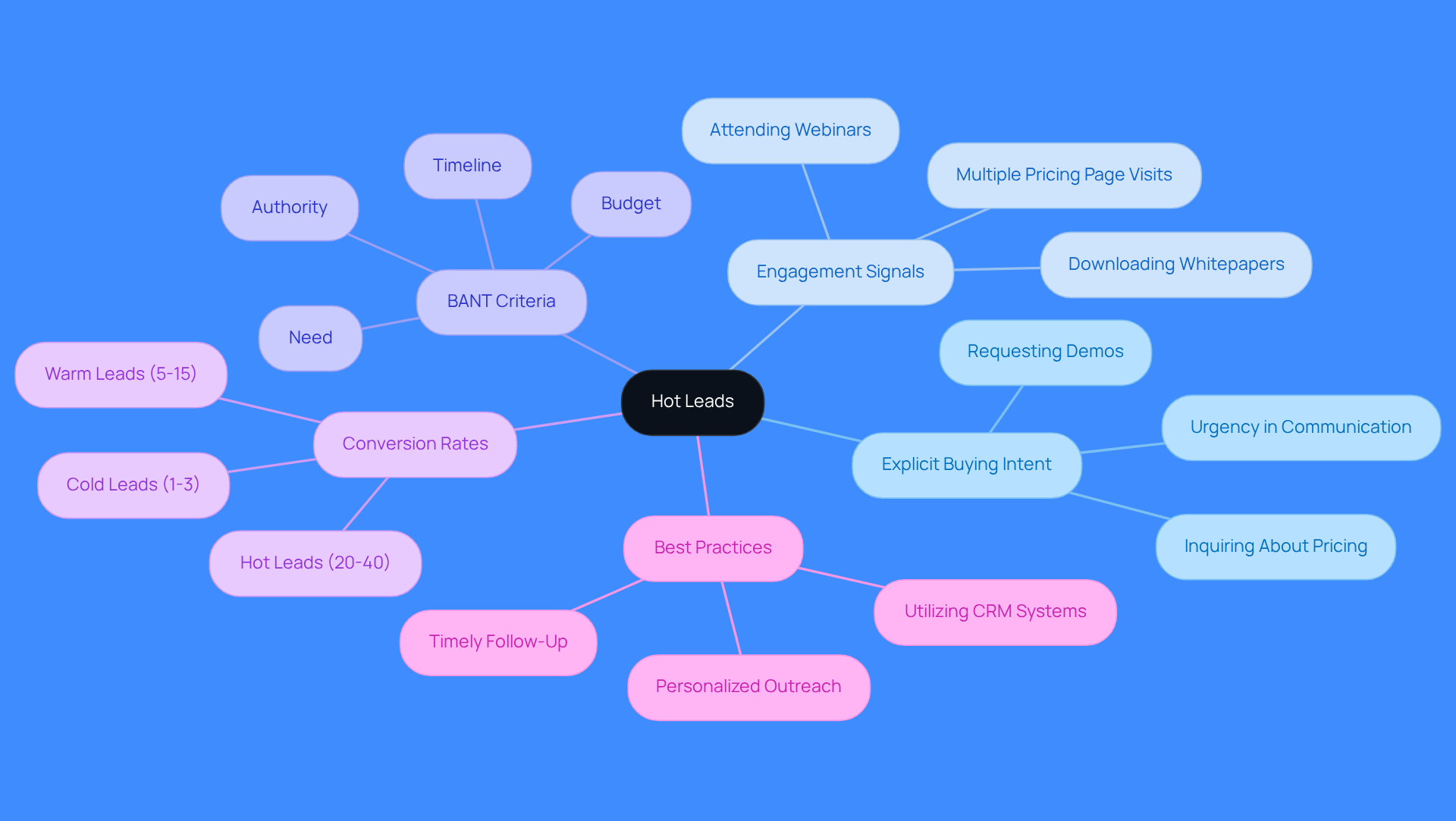
Understanding the characteristics of hot prospects is crucial for optimizing your sales strategy. Individuals who show strong interest in your product or service and are ready to make a purchase decision soon are referred to in the hot lead definition as hot prospects. Key characteristics include:
- Explicit Buying Intent: Hot leads often demonstrate urgency through actions like requesting demos, inquiring about pricing, or engaging directly with your sales team. Contacting prospects within five minutes of their interest boosts connection rates significantly.
- Engagement Signals: These prospects typically interact with your content, such as downloading whitepapers or attending webinars, indicating a deeper level of interest. Warm prospects convert at rates of 5-15%, while hot prospects convert at rates between 20-40%, underscoring their value.
The hot lead definition includes prospects that generally meet specific criteria such as budget, authority, need, and timeline (BANT), making them ideal candidates for immediate follow-up. This alignment allows marketing teams to prioritize outreach efficiently, maximizing conversion rates.
Sales teams must understand these traits to enhance engagement strategies and avoid common prospect management mistakes. For instance, establishing an organized client management system can improve resource allocation and boost conversion success, as shown in case studies where companies focused on the most promising opportunities. Without this understanding, sales teams risk wasting valuable resources on less promising leads.
Identify Hot Leads: Signs Your Prospect is Ready to Buy
Sales teams often miss out on high-intent prospects due to a lack of clarity in identifying key buying signals. Key indicators include:
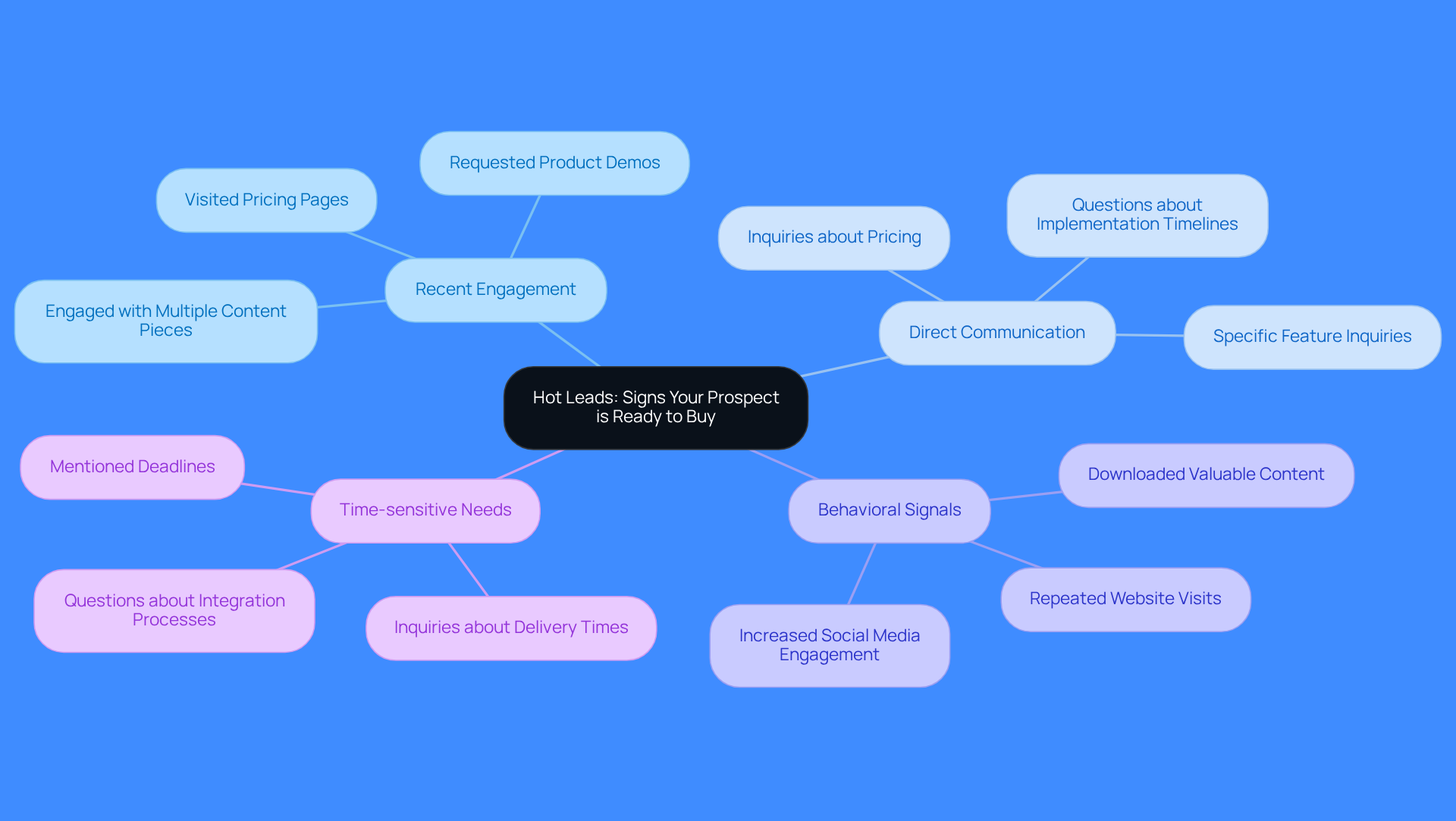
- Recent Engagement: Hot prospects convert at rates of 20-40%, far exceeding warm or cold leads. Look for those who have recently interacted with your content, like visiting pricing pages or requesting product demos.
- Direct Communication: Strong candidates often reach out with inquiries about your product. Questions about pricing, implementation timelines, or specific features indicate serious evaluation and readiness to buy.
- Behavioral Signals: Monitor actions such as repeated visits to your website, downloading valuable content, or engaging with your social media posts. Increased communication frequency from a potential client suggests heightened interest in your offerings.
- Time-sensitive needs: Time-sensitive needs can be understood through the hot lead definition, which indicates that hot leads may mention deadlines or express urgency in their need for a solution. For instance, inquiries about delivery times or integration processes often indicate they are assessing product suitability and timeline for use.
Focus on these indicators to prioritize outreach effectively and connect with high-intent prospects. Focusing on these indicators not only sharpens outreach but also drives measurable revenue growth.
Engage Hot Leads: Best Practices for Nurturing and Conversion
Engaging with the hot lead definition requires a strategic approach that directly impacts conversion rates. Here are key strategies to implement:
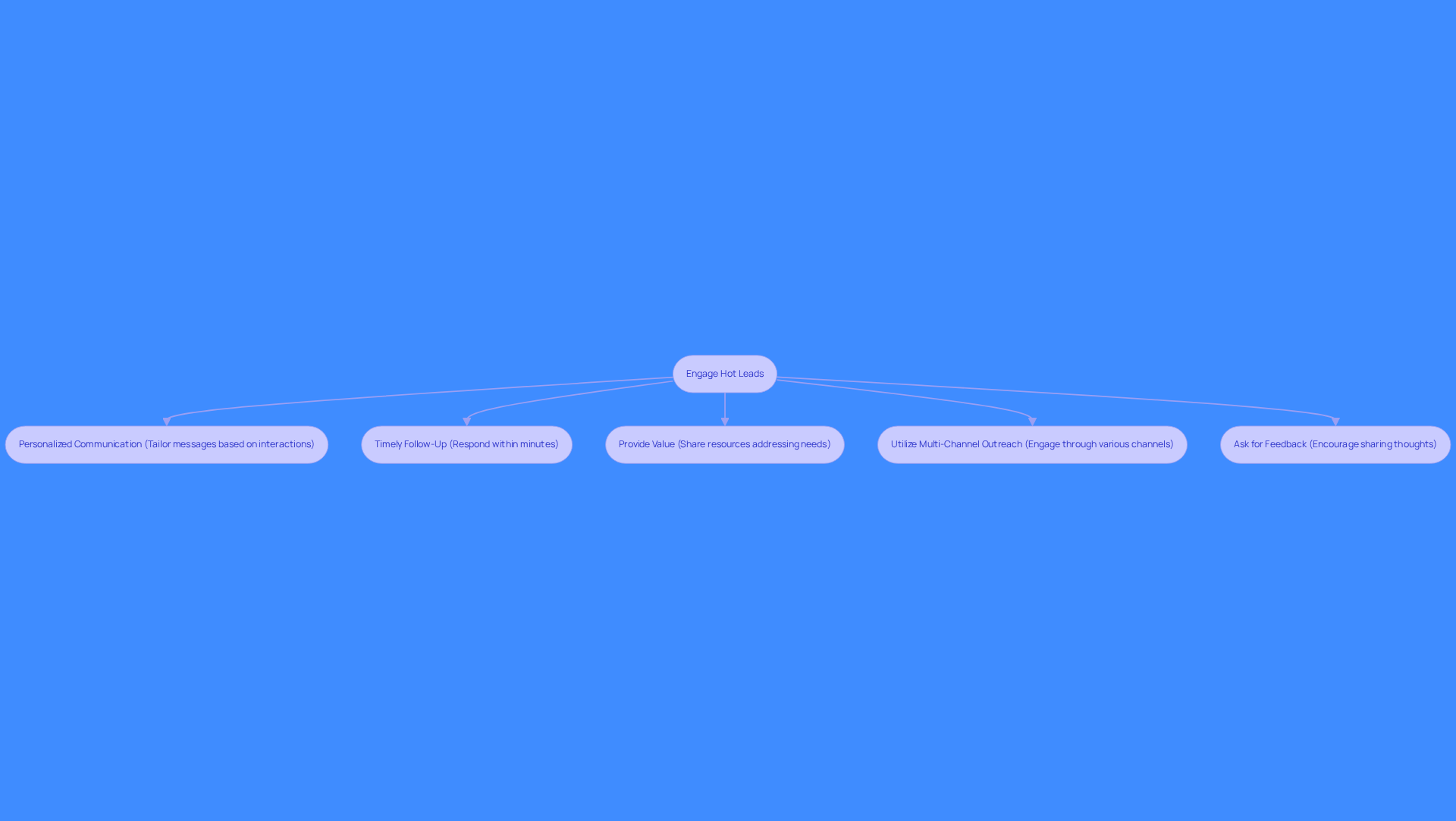
- Personalized Communication: Tailor your messages based on the prospect's previous interactions and expressed interests. Use their name and reference specific content they engaged with to create a connection.
- Timely Follow-Up: Respond to inquiries within minutes to keep momentum going. Quick responses can significantly increase the likelihood of conversion, as studies show faster response times correlate with higher satisfaction rates.
- Provide Value: Share relevant resources, such as case studies or testimonials, that address the potential client's specific needs and pain points. This builds trust and reinforces the value of your offering.
- Utilize Multi-Channel Outreach: Engage potential clients through various channels, including email, phone calls, and social media, to increase touchpoints and build rapport. Multi-threading strategies that involve engaging all stakeholders can enhance the effectiveness of your outreach.
- Ask for Feedback: Encourage prospects to share their thoughts on your offerings, providing valuable insights that help tailor your approach. This engagement fosters a sense of partnership and commitment.
Apply these strategies to boost interactions and increase conversion rates. This leads to more revenue and growth.
Avoid Mistakes: Common Errors in Handling Hot Leads
Many sales teams struggle with managing prospects according to the hot lead definition, leading to missed conversion opportunities. Here are key mistakes to avoid:
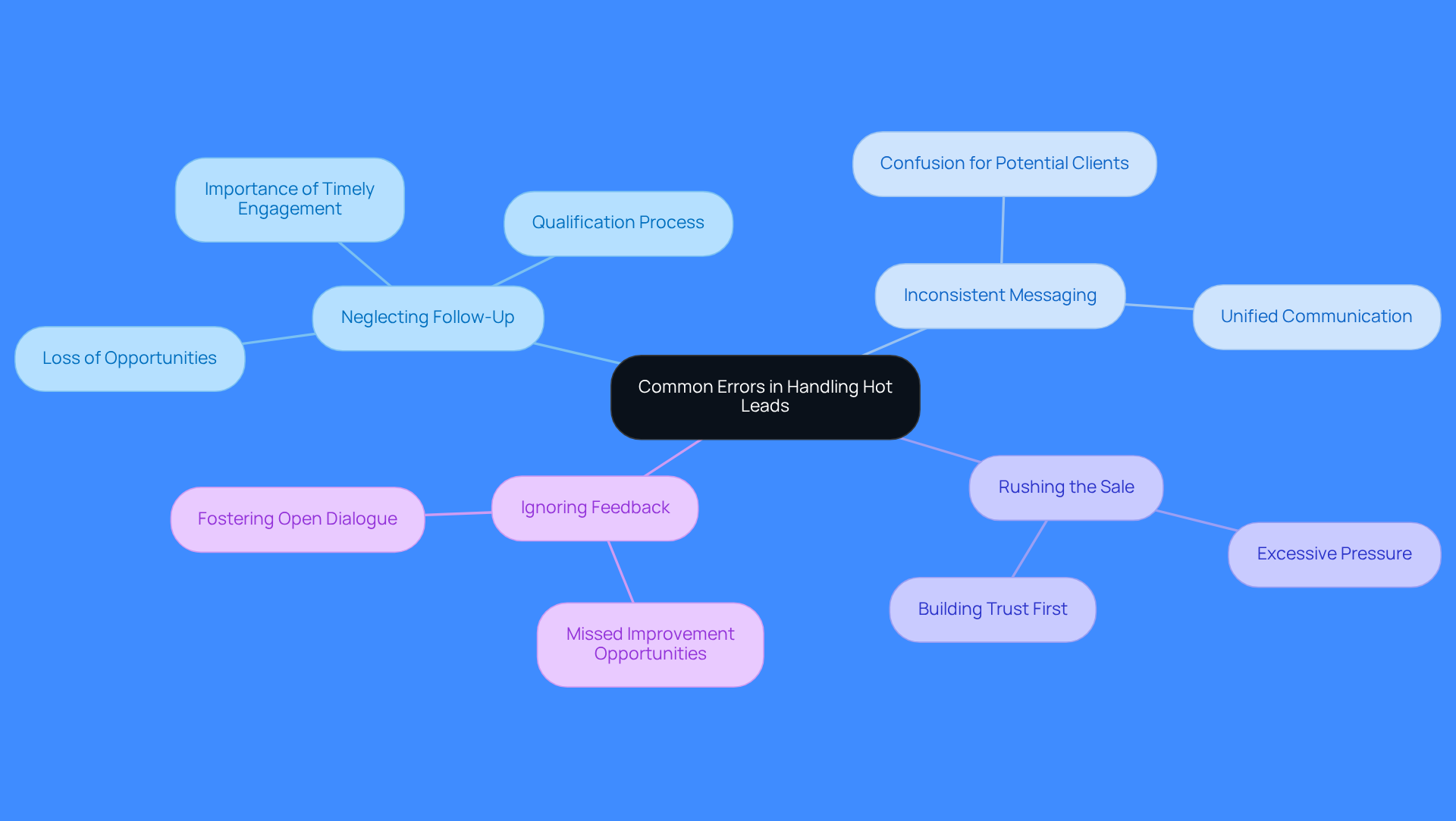
- Neglecting Follow-Up: If you don’t follow up quickly, you’re likely to lose out on opportunities. Prioritize promising prospects in your follow-up schedule to ensure timely engagement. Overlooking qualification can dilute efforts by treating all leads as if they fit the hot lead definition. Implement a qualification process based on engagement levels and fit criteria to effectively focus resources on the hot lead definition.
- Inconsistent Messaging: Conflicting information or a lack of a unified tone can confuse potential clients. Ensure all team members are aligned in their communication to maintain clarity and trust.
- Rushing the Sale: While urgency can be beneficial, excessive pressure may drive potential customers away. Concentrate on establishing connections and trust before advocating for a transaction.
- Ignoring Feedback: Not paying attention to prospects' concerns can result in missed opportunities for improvement. Foster open dialogue and be willing to adjust your approach based on their input.
Without addressing these pitfalls, teams risk losing valuable prospects and revenue potential. Statistics suggest that a lack of follow-up can result in considerable losses of qualified prospects, highlighting the significance of prompt and strategic engagement. Additionally, case studies reveal that companies that refine their lead qualification processes often see a higher return on investment, underscoring the value of targeted efforts in lead management.
Conclusion
Sales teams often struggle to identify and prioritize hot leads, leading to wasted resources and missed opportunities. By focusing on high-intent leads, teams streamline efforts and drive measurable revenue outcomes.
Identifying buying intent and engagement signals is crucial for nurturing hot leads effectively. Implement timely follow-ups and personalized outreach to boost conversion rates. Avoid common mistakes like neglecting follow-ups; consistent messaging is key to capturing opportunities.
Leveraging insights on hot leads sharpens sales strategies and enhances performance. A proactive approach to managing hot leads not only boosts conversion rates but also strengthens customer relationships, driving long-term loyalty.
Frequently Asked Questions
What defines a hot lead in sales?
A hot lead is defined as a prospect who shows strong interest in a product or service and is ready to make a purchase decision soon.
What are the key characteristics of hot leads?
Key characteristics of hot leads include explicit buying intent, such as requesting demos or pricing information, and engagement signals, like downloading content or attending webinars.
How does the timing of contact affect hot leads?
Contacting prospects within five minutes of their expressed interest significantly boosts connection rates, enhancing the chances of conversion.
What is the conversion rate for warm and hot prospects?
Warm prospects convert at rates of 5-15%, while hot prospects convert at rates between 20-40%, highlighting their higher value.
What criteria do hot leads typically meet?
Hot leads generally meet specific criteria known as BANT, which stands for Budget, Authority, Need, and Timeline, making them ideal candidates for immediate follow-up.
Why is it important for sales teams to understand the traits of hot leads?
Understanding the traits of hot leads helps sales teams enhance their engagement strategies and avoid wasting resources on less promising leads.
How can an organized client management system benefit sales teams?
An organized client management system can improve resource allocation and boost conversion success by allowing sales teams to focus on the most promising opportunities.
List of Sources
- Define Hot Leads: Key Characteristics and Importance
- What are hot leads? Top signs your prospect is ready to buy (https://monday.com/blog/crm-and-sales/hot-leads)
- Warm Leads vs Hot Leads: How to Classify and Convert Both (https://pipeline.zoominfo.com/sales/how-to-differentiate-between-warm-and-hot-leads)
- Hot Leads (https://nrev.ai/glossary/hot-leads)
- Hot Leads in Sales: Identifying and Converting Effectively - Apptivo (https://apptivo.com/blog/hot-leads-in-sales-identifying-and-converting-effectively)
- Cold, Warm, and Hot sales leads: What's the difference? (https://mediaplacepartners.com/cold-warm-and-hot-leads-whats-the-difference)
- Identify Hot Leads: Signs Your Prospect is Ready to Buy
- Buying Signals in Sales: 15+ Key Indicators and Behavioral Patterns (2026) | Docket (https://docket.io/blog/buying-signals-in-sales-indicators-and-behavioral-patterns)
- What are hot leads? Top signs your prospect is ready to buy (https://monday.com/blog/crm-and-sales/hot-leads)
- 5 Buyer Signals in Sales (https://walnut.io/blog/sales-tips/5-buyer-signals-in-sales-that-indicate-a-prospect-is-ready-for-next-steps)
- Cold, Warm & Hot Leads: How To Find and Convert Each Type (Complete Guide) - PhantomBuster Blog (https://phantombuster.com/blog/sales-prospecting/hot-leads)
- Engage Hot Leads: Best Practices for Nurturing and Conversion
- Hot Leads in Sales: Identifying and Converting Effectively - Apptivo (https://apptivo.com/blog/hot-leads-in-sales-identifying-and-converting-effectively)
- 10 Lead Nurturing Strategies to Grow B2B Pipeline (https://pipeline360.com/10-effective-lead-nurturing-strategies-to-grow-your-business)
- Cold, Warm, and Hot Leads: How to Nurture Sales Prospects (https://only-b2b.com/blog/cold-leads-warm-leads-and-hot-leads)
- What are hot leads? Top signs your prospect is ready to buy (https://monday.com/blog/crm-and-sales/hot-leads)
- What Are Hot Leads in Sales? How to Close Them in 2024 (https://cognism.com/blog/hot-lead)
- Avoid Mistakes: Common Errors in Handling Hot Leads
- 10 Sales Mistakes in Lead Generation You Must Avoid in 2025 (https://clearout.io/blog/sales-mistakes-in-lead-generation)
- Common B2B Lead Generation Mistakes to Avoid (https://superhumanprospecting.com/common-mistakes-in-b2b-lead-generation-and-how-to-avoid-them)
- How to Avoid Sales Mistakes (https://netsuite.com/portal/resource/articles/crm/common-sales-mistakes.shtml)
- The biggest mistakes in B2B lead generation | Leadinfo (https://leadinfo.com/en/blog/the-biggest-mistakes-in-b2b-lead-generation-and-how-to-avoid-them)
- 8 Common Mistakes to Avoid When Handling Sales Leads (https://growthrhino.com/8-common-mistakes-to-avoid-when-handling-sales-leads)