4 Best Practices from Our Lead Response Time Study for Sales Success

Introduction
Slow lead response times lead to lost opportunities and diminished sales potential. Responding to inquiries within five minutes increases the likelihood of qualifying a prospect significantly compared to waiting 30 minutes. Sales teams face pressure to adapt as buyer expectations evolve with AI-driven interactions. Organizations must implement strategies to enhance lead response times and convert interest into sales.
Understand Lead Response Time and Its Impact on Sales
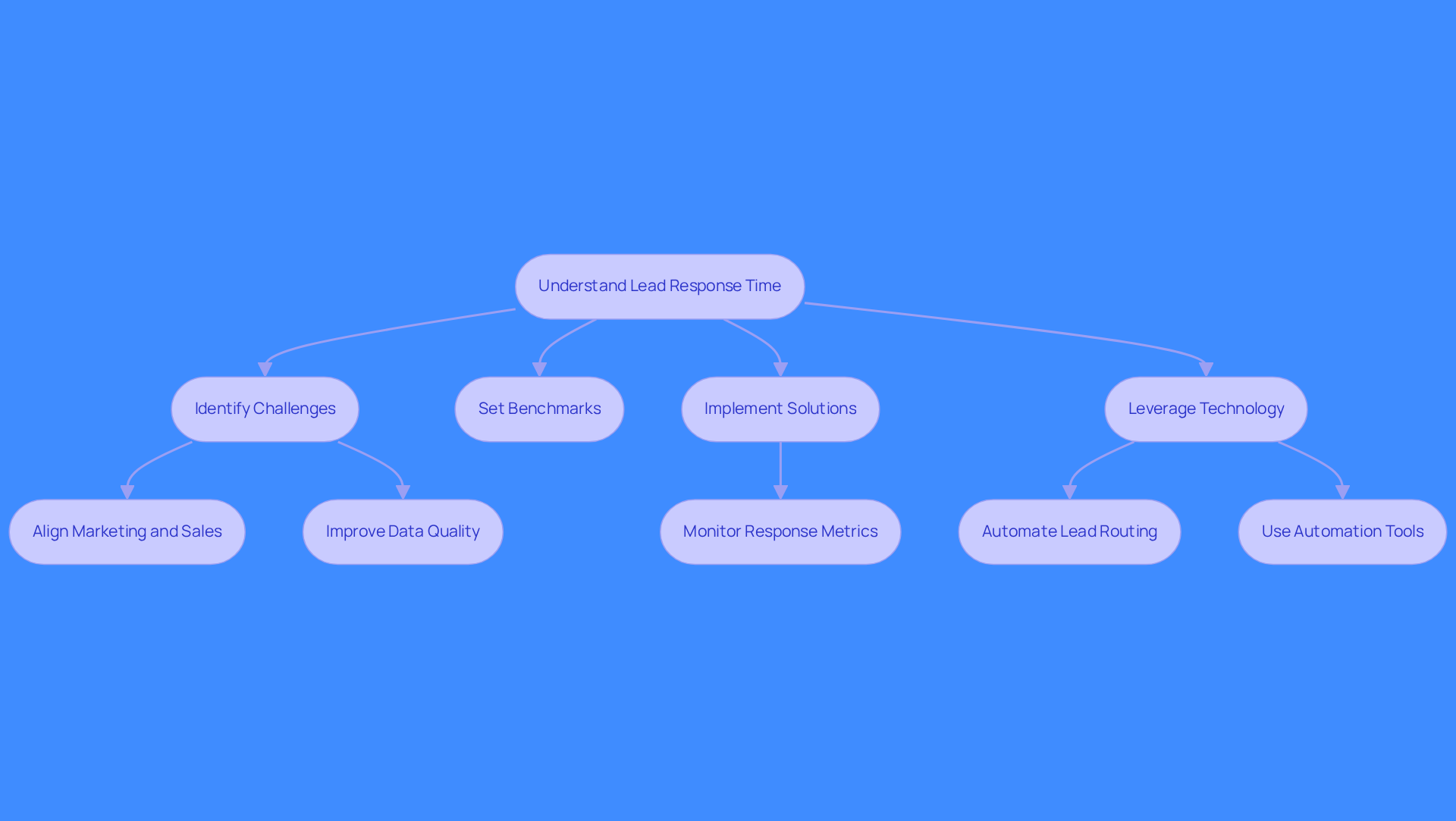
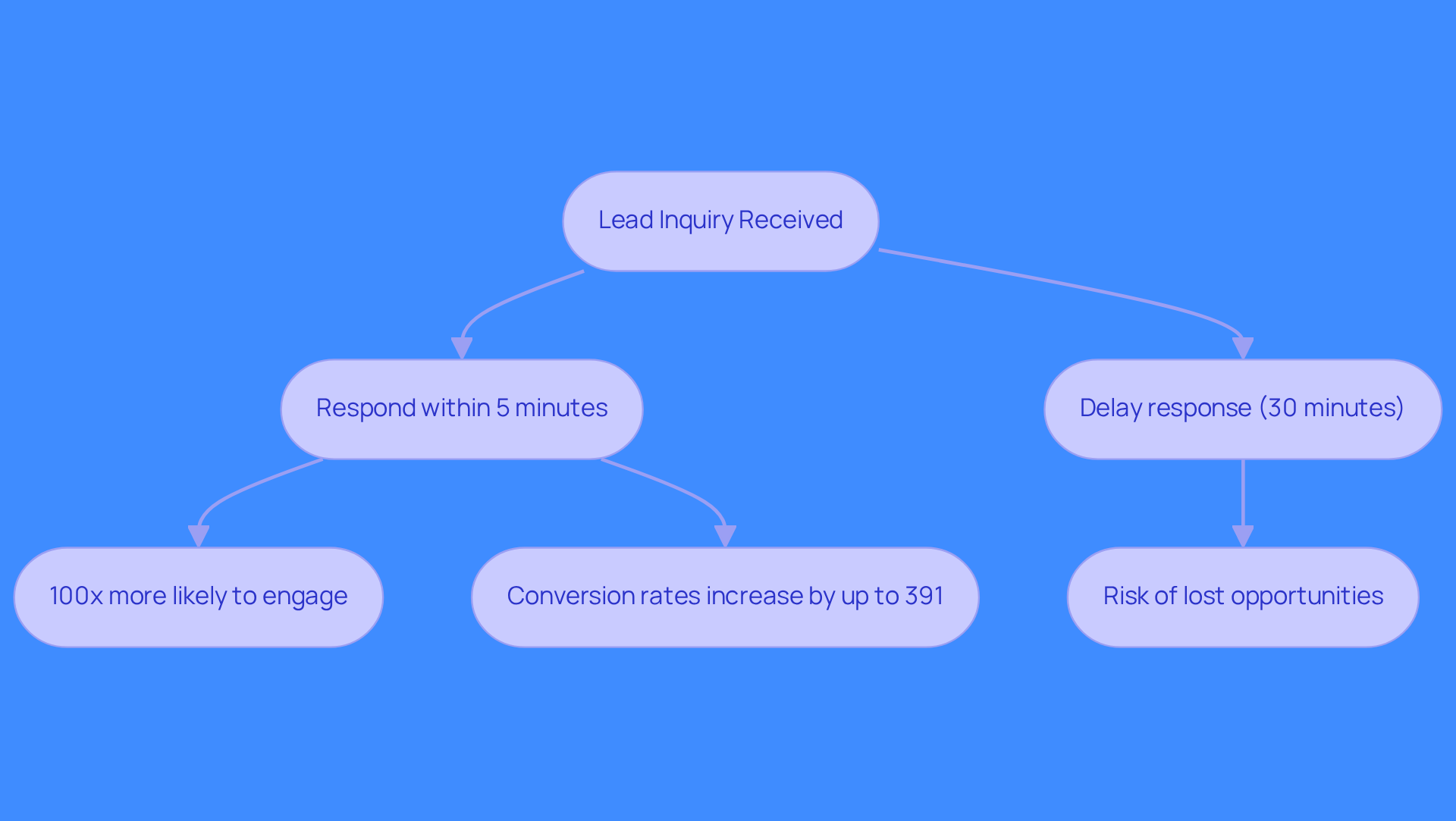
Lead response duration is critical; it directly impacts your ability to qualify prospects effectively. Research shows that replying within five minutes can enhance the chances of qualifying a prospect by 21 times compared to a 30-minute delay. Quick responses are crucial since prospects show the most interest right after they express intent. Delays in response lead to lost opportunities as prospects turn to faster competitors. Businesses that respond within the first hour are seven times more likely to qualify prospects than those that take longer. Understanding this metric helps teams set benchmarks and improve processes, which can lead to a lead response time study that results in higher conversion rates and revenue growth.
Case studies highlight the operational difficulties that contribute to sluggish inquiry times. Misalignment between marketing and sales often causes delays, as marketing generates leads while sales waits for the most promising ones. Additionally, poor prospect information, such as inaccurate contact details, hinders swift replies from sales representatives. By addressing these core issues, organizations can significantly improve their inquiry handling times and enhance overall business efficiency.
As we approach 2026, buyer expectations are shifting towards immediate acknowledgment due to generative AI interactions. According to the lead response time study, the optimal speed-to-lead target is under five minutes, with top-performing companies achieving response times of one to two minutes. This shift underscores the need for marketing teams to adapt their strategies and leverage automation to streamline prospect management processes, ensuring they remain competitive in a rapidly changing environment.
Regie.ai's AI-driven engagement platform automates follow-ups and creates personalized messaging across email, LinkedIn, and calls, enabling teams to respond promptly and effectively. By utilizing over 100 signals from platforms like Google and LinkedIn, Regie.ai prioritizes leads based on genuine buying intent, allowing representatives to focus on high-value prospects. With Regie.ai, companies can significantly enhance their outbound revenue initiatives, ensuring they remain competitive in a rapidly changing market.
Explore Key Benchmarks and Statistics for Effective Lead Response
Sales teams struggle to engage prospects quickly enough, risking lost opportunities. According to a lead response time study conducted by MIT, businesses that reply within five minutes are 100 times more likely to engage with a prospect compared to those who delay 30 minutes. According to a lead response time study, conversion rates increase by up to 391% when prospects are contacted within the first minute. According to a lead response time study, the ideal engagement period is under five minutes, with early mornings and late afternoons recognized as the most favorable times for interaction. By adopting these benchmarks, teams can gain a competitive edge and improve their conversion rates.
For example, a plumbing firm using Regie.ai's platform was able to reply to inquiries within seconds, engaging homeowners before rivals could, highlighting the significance of prompt action. By applying these optimal methods and utilizing Regie.ai's features, sales groups can greatly enhance their conversion rates and overall effectiveness, efficiently handling their pipeline and engaging 3 to 5 times more accounts with tailored, signal-driven outreach.
Implement Proven Strategies to Enhance Lead Response Speed
Slow response times can lead to lost opportunities and frustrated prospects in the lead response time study.
- Automate Initial Responses: Implement automated email replies or chatbots to acknowledge inquiries promptly. This ensures that no prospect feels neglected while awaiting a personal follow-up, capitalizing on the critical first moments of engagement.
- Prioritize Prospects: Utilize a scoring system to identify and prioritize high-value prospects. Concentrating efforts on those with the highest potential for conversion significantly enhances chances of success.
- Set Clear Reply Goals: Establish internal benchmarks for reply durations, aiming for under 5 minutes, recognized as the minimum viable standard across industries. Regularly review team performance against these goals to identify areas for improvement and maintain accountability.
- Train Sales Reps: Provide comprehensive training on effective communication techniques and the importance of timely follow-ups. Ensuring all team members understand the impact of their response times can enhance engagement and conversion rates.
Faster responses, as highlighted in the lead response time study, translate directly into higher conversion rates and improved sales outcomes.

Leverage Technology and Automation for Faster Lead Engagement
Slow response times can cost deals and damage relationships in outbound sales. Here are some effective methods to enhance client engagement:
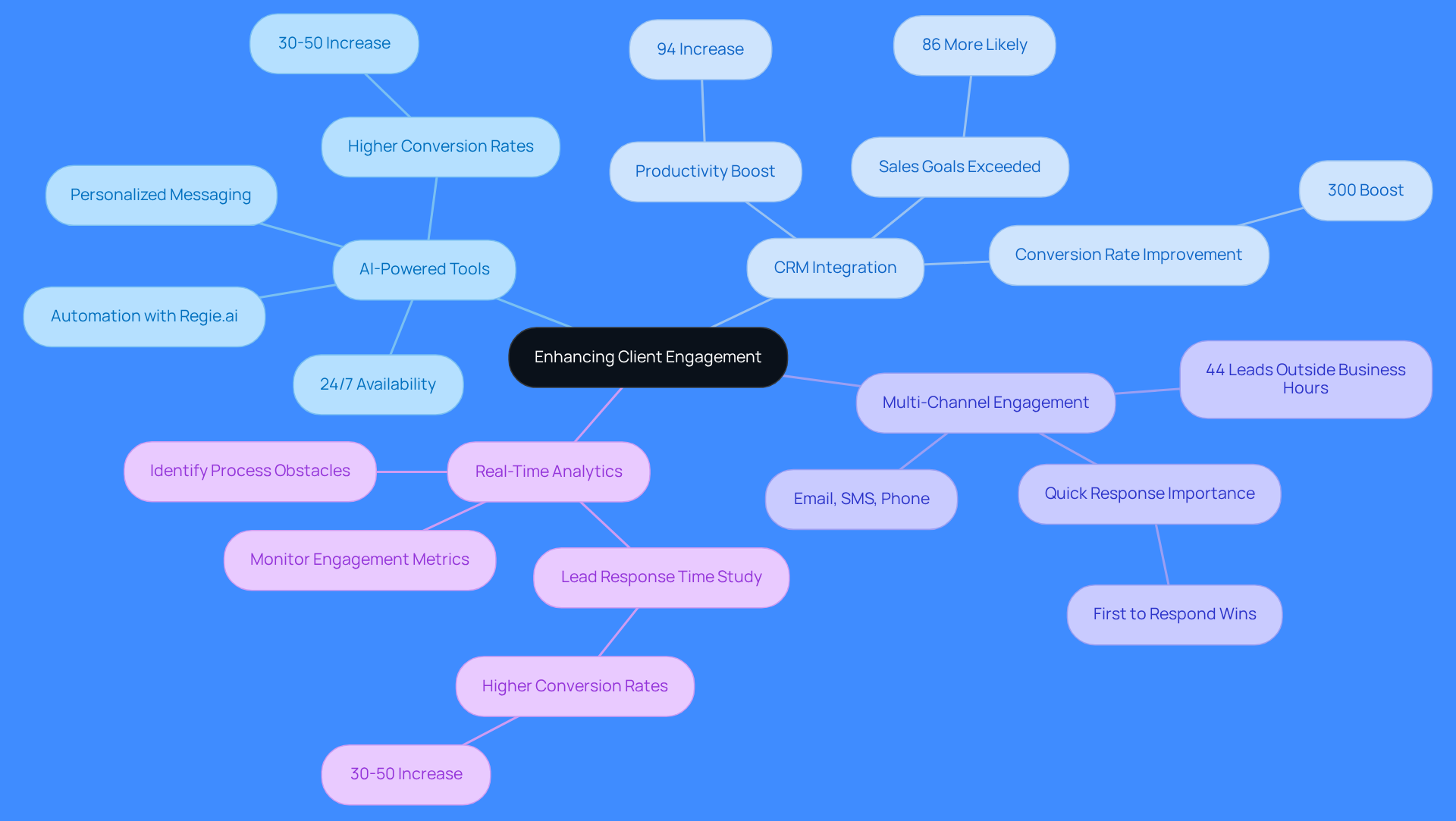
- AI-Powered Tools: Use AI-driven platforms like Regie.ai to automate prospect routing and follow-ups. AI tools work around the clock, ensuring quick responses and consistent messaging, which cuts down on delays and keeps interactions personal.
- CRM Integration: Implement a robust CRM system that tracks prospect interactions and automates follow-up reminders. Businesses using CRM systems report a 94% increase in productivity and are 86% more likely to exceed sales goals, helping sales reps stay organized and responsive.
- Multi-Channel Engagement: Engage potential clients through various channels - email, SMS, and phone calls - to reach them quickly and effectively. This multi-channel strategy is crucial, as 44% of prospects are generated outside business hours, increasing the chances of connecting at their preferred touchpoint.
- Real-Time Analytics: Monitor prospect engagement metrics in real-time to identify process obstacles and make necessary adjustments swiftly. Organizations that perform a lead response time study while implementing AI lead response automation typically see 30-50% higher conversion rates, showcasing the impact of timely engagement.
Embracing these technologies not only boosts responsiveness but also drives measurable revenue growth.
Conclusion
Many sales teams struggle with slow response times, losing potential leads to competitors. Quick engagement increases the chances of qualifying leads and boosts conversion rates. Rapid responses help businesses capitalize on initial customer interest and stay competitive.
Automating responses and prioritizing high-value leads are crucial for improving reply times. Regie.ai streamlines processes, enabling sales teams to respond in under five minutes. Lead response time is critical for sales success.
Sales teams must leverage technology to meet evolving buyer expectations and improve performance. Refining lead engagement processes now positions organizations to outperform competitors in the evolving market landscape.
Frequently Asked Questions
Why is lead response time important in sales?
Lead response time is critical because it directly impacts the ability to qualify prospects effectively. Research indicates that responding within five minutes can increase the chances of qualifying a prospect by 21 times compared to a 30-minute delay.
What happens if there are delays in responding to leads?
Delays in response can lead to lost opportunities, as prospects may turn to faster competitors. Businesses that respond within the first hour are seven times more likely to qualify prospects than those that take longer.
How can understanding lead response time benefit sales teams?
Understanding lead response time helps teams set benchmarks and improve processes, which can lead to higher conversion rates and revenue growth.
What operational difficulties contribute to slow inquiry times?
Misalignment between marketing and sales often causes delays, as marketing generates leads while sales waits for the most promising ones. Additionally, poor prospect information, such as inaccurate contact details, hinders swift replies from sales representatives.
How are buyer expectations changing regarding lead response times?
As we approach 2026, buyer expectations are shifting towards immediate acknowledgment due to generative AI interactions. The optimal speed-to-lead target is under five minutes, with top-performing companies achieving response times of one to two minutes.
How can marketing teams adapt to meet these changing expectations?
Marketing teams can adapt by leveraging automation to streamline prospect management processes, ensuring they remain competitive in a rapidly changing environment.
How does Regie.ai help improve lead response times?
Regie.ai's AI-driven engagement platform automates follow-ups and creates personalized messaging across email, LinkedIn, and calls, enabling teams to respond promptly and effectively.
What features does Regie.ai offer to prioritize leads?
Regie.ai utilizes over 100 signals from platforms like Google and LinkedIn to prioritize leads based on genuine buying intent, allowing representatives to focus on high-value prospects.
What impact can Regie.ai have on outbound revenue initiatives?
By using Regie.ai, companies can significantly enhance their outbound revenue initiatives, ensuring they remain competitive in a rapidly changing market.
List of Sources
- Understand Lead Response Time and Its Impact on Sales
- Why Speed-To-Lead Matters More Than Ever In 2026 │ Stamina (https://staminasales.net/blog/why-speed-to-lead-matters-more-than-ever-in-2026)
- 43 CRM Lead Response Time Impact Statistics | Demand Local, Inc. (https://demandlocal.com/blog/crm-lead-response-time-impact-statistics)
- Lead Response Time: Why Slow Follow-Up Is Usually a Routing Problem, Not a Rep Problem (https://leandata.com/blog/lead-response-time)
- How Faster Lead Response Times Can Skyrocket Conversions (https://voiso.com/articles/lead-response-time-metrics)
- Lead Response Time Statistics 2026: 47 Data Points (https://greetnow.com/blog/lead-response-time-statistics)
- Explore Key Benchmarks and Statistics for Effective Lead Response
- Lead Response Time Benchmarks (2026): The Real Numbers (https://aloware.com/blog/lead-response-time-benchmarks)
- Lead Response Time Statistics (2026): The 5-Minute Rule (https://caseyresponse.com/blog/lead-response-time-statistics)
- Lead Response Time Statistics 2026: 47 Data Points (https://greetnow.com/blog/lead-response-time-statistics)
- Lead Response Time Statistics: 30+ Data Points (2026) (https://setsmart.io/blog/lead-response-time-statistics)
- Implement Proven Strategies to Enhance Lead Response Speed
- Why Speed-To-Lead Matters More Than Ever In 2026 │ Stamina (https://staminasales.net/blog/why-speed-to-lead-matters-more-than-ever-in-2026)
- Speed to Lead: Automation Fixes Response Delays | Growth Rocket (https://growth-rocket.com/blog/speed-to-lead-how-automation-fixes-response-delays-2)
- Speed to Lead in 2026: Enterprise Guide for Salesforce | Plauti (https://plauti.com/blog/why-speed-to-lead-matters-and-how-you-can-improve-it)
- Speed-to-Lead Benchmarks 2026: The Data Behind Why Most Teams Lose Leads (https://apten.ai/blog/speed-to-lead-benchmarks-2026)
- Leverage Technology and Automation for Faster Lead Engagement
- 43 CRM Lead Response Time Impact Statistics | Demand Local, Inc. (https://demandlocal.com/blog/crm-lead-response-time-impact-statistics)
- How to use AI for lead generation: 7 strategies to generate better leads (https://monday.com/blog/crm-and-sales/ai-lead-management)
- What 2026 Messaging Trends Reveal About the Future of Customer Engagement (https://blogs.oracle.com/cx/what-2026-messaging-trends-reveal-about-the-future-of-customer-engagement)
- Top Lead Generation Trends That Will Dominate in 2026 - Digital ByteTeck (https://digitalbyteteck.com/top-lead-generation-trends)
- AI Lead Response Automation via Messaging Channels (https://kogents.ai/blogs/ai-lead-response-automation)
FAQs
Read more posts
View all Blogs
Need more help?
If you still have questions, make sure to check out our Help Center: there, you'll find all the tips & advice you'll need to get your team up & running with Regie.ai.