Master B2B Sales AI: Align Tools for Maximum Impact and Success

Introduction
B2B sales is facing significant challenges, largely due to outdated workflows and fragmented tech stacks. As organizations strive to improve their sales processes, the need for effective AI tools becomes critical. This article examines how aligning AI technologies with business objectives can streamline operations and enhance performance. Sales teams must navigate the rapid evolution of AI to select and implement the right tools that not only achieve their goals but also foster sustained success in a competitive landscape.
Understand AI Sales Tools and Their Capabilities
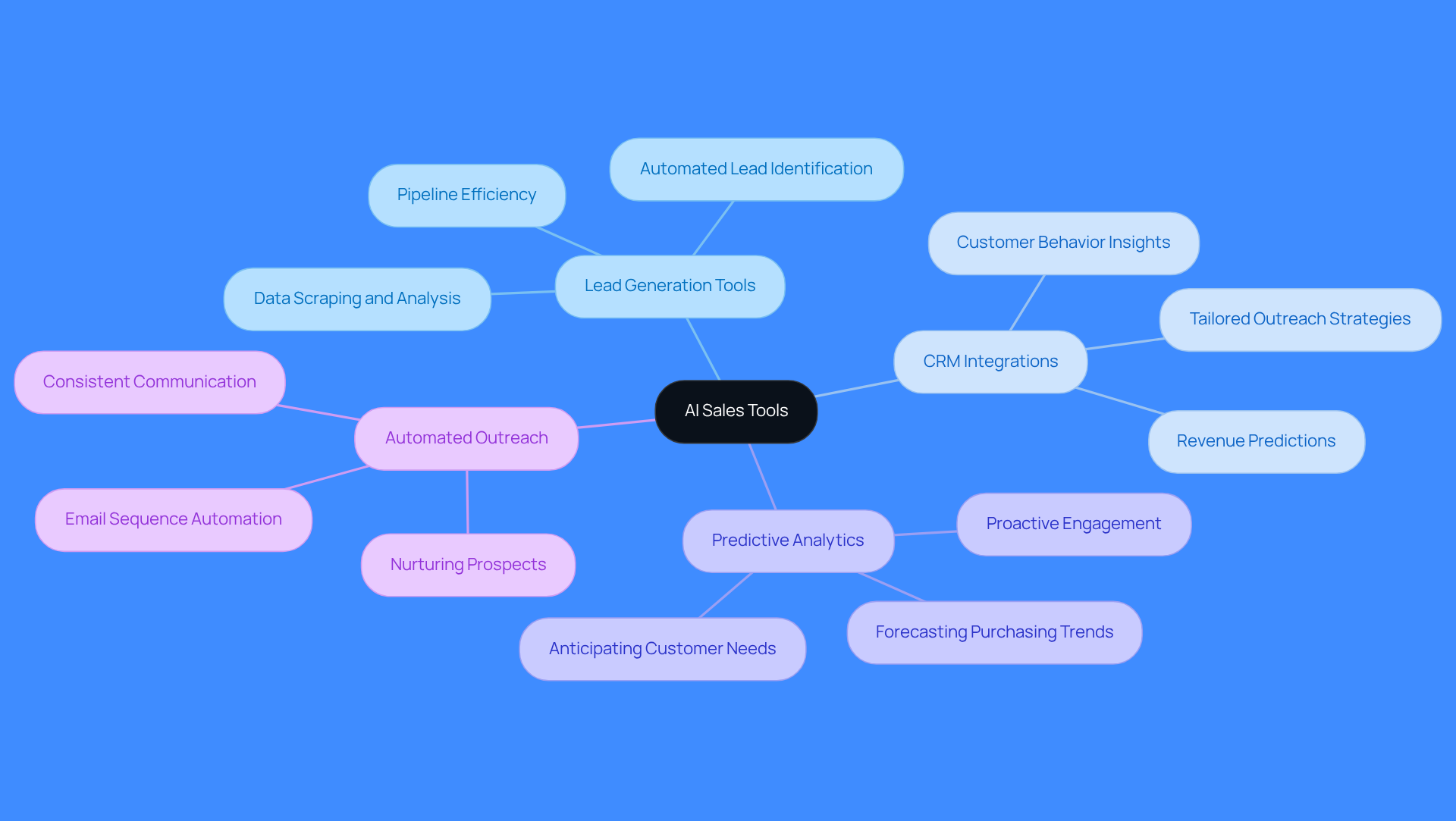
B2B sales AI has transformed sales operations, streamlining processes and boosting productivity. Key components include:
- Lead Generation Tools: These tools automate the identification of potential leads through advanced data scraping and analysis, allowing sales teams to focus on high-quality prospects. Companies leveraging B2B sales AI for lead generation have seen notable increases in pipeline efficiency and deal closures.
- CRM Integrations: AI-enhanced CRMs deliver insights into customer behavior, enabling representatives to tailor their outreach strategies effectively. This integration not only enhances engagement but also sharpens revenue predictions, as teams can leverage real-time data to inform their decisions.
- Predictive Analytics: By analyzing historical data, predictive analytics tools forecast future purchasing trends and customer behaviors, facilitating proactive engagement. Sales teams that implement these tools often experience a marked improvement in their ability to anticipate customer needs and adjust their strategies accordingly.
- Automated Outreach: Tools that automate email sequences and follow-ups ensure consistent communication without overloading representatives. This automation allows teams to maintain a steady stream of outreach, crucial for nurturing prospects and driving conversions.
Understanding these capabilities enables sales teams to select the right resources that align with their specific needs and objectives, ultimately leading to improved sales outcomes. Industry leaders have noted that integrating B2B sales AI in prospect generation not only enhances efficiency but also significantly impacts overall revenue performance, making it a critical component of modern sales strategies.
Align AI Tools with Business Objectives and Sales Processes
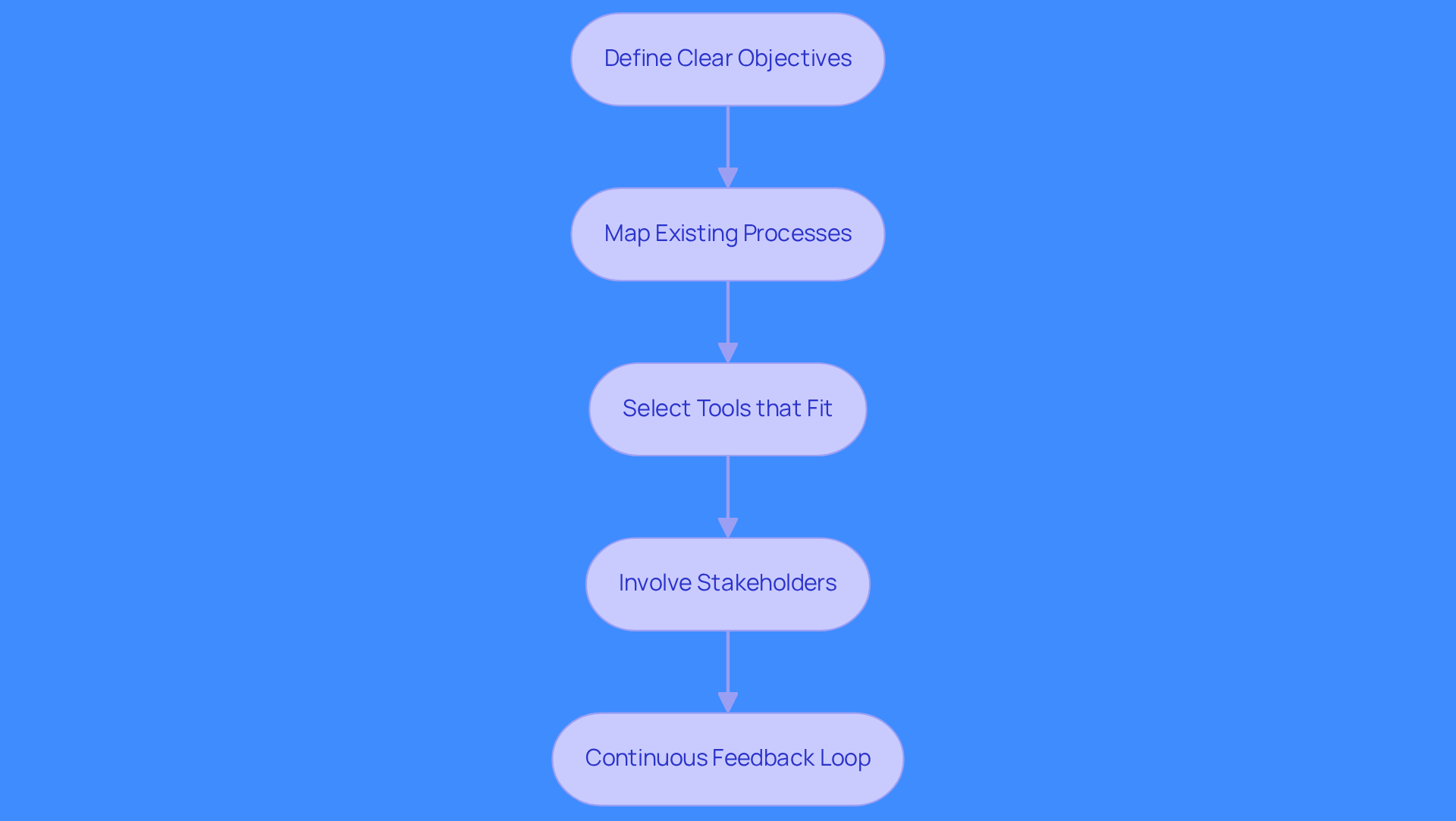
To boost the impact of AI technologies, sales teams must ensure that their b2b sales ai innovations align with their business goals. Here are key steps to achieve this:
- Define Clear Objectives: Set specific revenue targets that AI resources should support, like improving prospect conversion rates or shortening sales cycles. Clear objectives guide the selection and implementation of b2b sales ai solutions, ensuring they lead to measurable outcomes. Organizations that effectively deploy b2b sales ai see conversion rate improvements of 40% or more, highlighting the need to align these tools with clear goals.
- Map Existing Processes: Review current sales workflows to find areas where AI can help, such as automating repetitive tasks or enhancing prospect qualification. Understanding existing processes pinpoints where AI can streamline operations and boost efficiency. For instance, Regie.ai's AI Prospecting Agents cut down the tedious work of researching leads and crafting personalized messages, allowing sales personnel to focus on selling.
- Select Tools that Fit: Opt for AI tools that complement existing processes and tackle specific pain points in the sales cycle. Tools should integrate smoothly and enhance the team's ability to meet defined objectives. Sales groups using Regie.ai's solutions for b2b sales ai report significant reductions in time spent on unqualified prospects, enabling them to concentrate on high-potential opportunities.
- Involve Stakeholders: Bring sales representatives and leadership into the selection process to ensure buy-in and that the resources meet the team's needs. Collaboration fosters ownership and increases the chances of successful adoption. A common pitfall in AI implementation is neglecting to engage key stakeholders, which can lead to resistance and underutilization of resources.
- Continuous Feedback Loop: Create a system for ongoing feedback to improve the application of AI resources and ensure they remain aligned with evolving business objectives. Regular evaluations help adjust strategies and resources to changing market conditions and team dynamics. Regie.ai's thoughtful and collaborative implementation approach exemplifies this, enabling companies to lessen administrative burdens while significantly boosting productivity.
By following these steps, sales teams can effectively integrate b2b sales ai resources into their operations, resulting in improved efficiency and better alignment with overall business objectives. Organizations that successfully implement AI, like those using Regie.ai, report conversion rate enhancements of 40% or more, underscoring the potential for substantial ROI when resources align with clear objectives.
Select Appropriate AI Tools and Prepare Your Team for Implementation
The effective use of AI resources depends on careful selection and preparation. Here are key practices to implement:
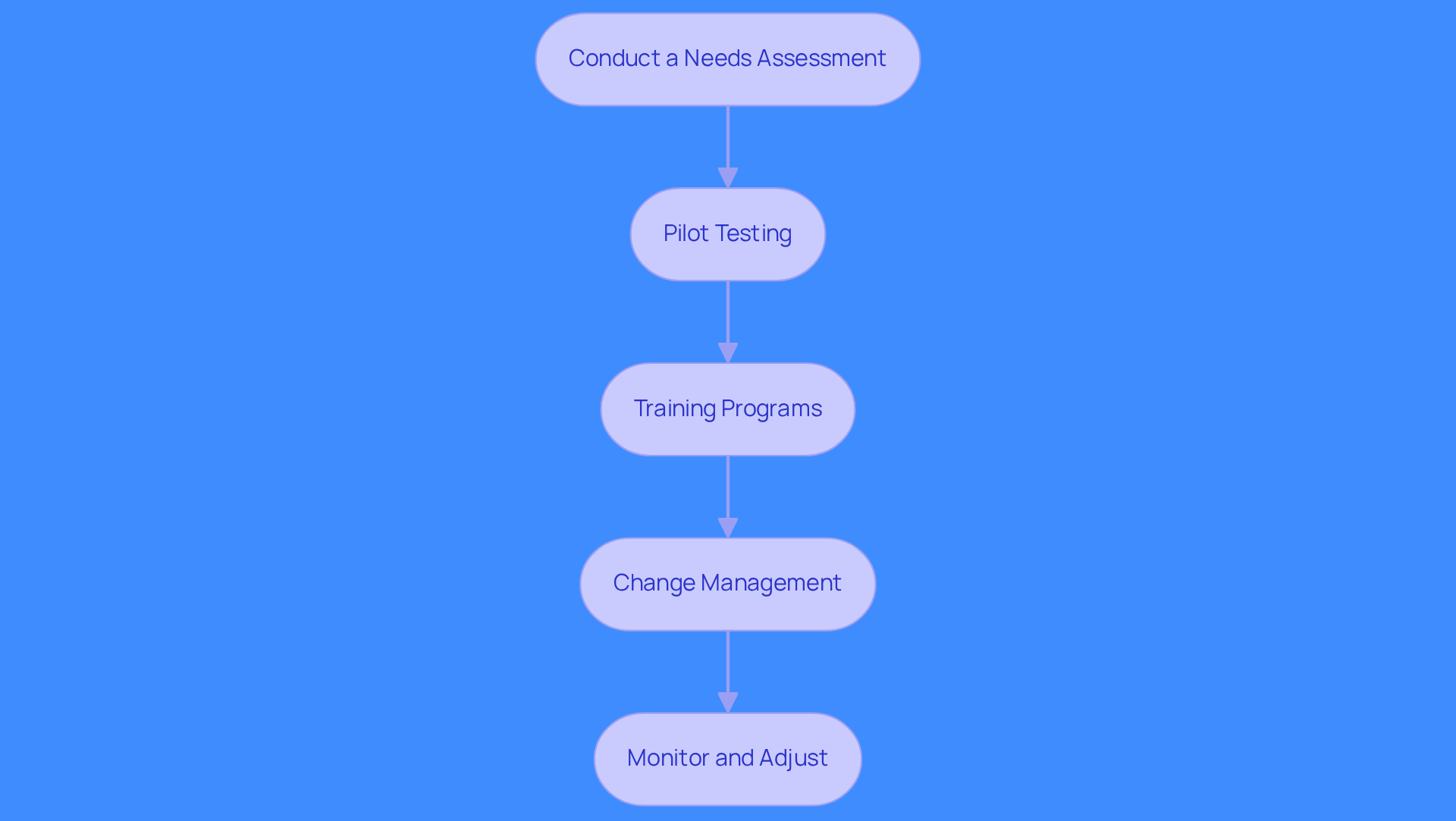
- Conduct a Needs Assessment: Assess the specific needs of your sales team to pinpoint which AI resources will deliver the greatest benefit. This step is crucial; aligning resources with team needs can significantly boost productivity.
- Pilot Testing: Before rolling out on a large scale, conduct pilot tests with selected resources to gauge their effectiveness and gather user feedback. Research indicates that organizations that successfully implement AI see a 10-25% increase in their pipeline, underscoring the importance of validating resources in real-world scenarios.
- Training Programs: Develop comprehensive training initiatives to equip the sales team with knowledge about new resources, focusing on practical applications and best practices. With over 80% of sellers reporting data integration challenges as a barrier to AI adoption, effective training can help overcome this hurdle.
- Change Management: Apply change management strategies to tackle resistance and ensure a seamless transition to new workflows. Involving team members during the pilot phase can promote acceptance and facilitate the shift.
- Monitor and Adjust: Post-implementation, continuously track the performance of AI systems and adjust based on user feedback and changing business needs. This iterative approach ensures that resources remain aligned with revenue objectives and can adapt to market shifts.
By following these steps, sales teams can ensure they have the right resources in place and are prepared to use them effectively, leading to enhanced productivity and revenue success.
Measure Success and Optimize AI Usage for Continuous Improvement
To achieve the desired outcomes with AI tools, teams must set clear metrics for success and optimize their usage continuously. Here are essential practices:
- Define Key Performance Indicators (KPIs): Set specific KPIs that align with business goals, such as lead conversion rates, transaction cycle length, and customer engagement metrics. Modern sales KPIs should focus on understanding buyer behavior, not just tracking activity volume.
- Regular Performance Evaluations: Regularly assess AI system performance against established KPIs to pinpoint areas for improvement. This includes evaluating how effectively AI applications enhance deal momentum and the quality of buyer engagement.
- User Feedback: Gather insights from sales representatives about their experiences with AI resources to identify challenges and opportunities for improvement. Involving users in this process can uncover insights that drive better adoption and integration of AI solutions.
- Iterative Enhancements: Leverage insights from performance evaluations and user feedback to make iterative improvements in AI utilization and integration. This approach ensures that transaction processes evolve alongside technological advancements, maximizing efficiency and effectiveness.
- Benchmarking: Compare performance against industry standards and best practices to identify gaps and growth opportunities. Organizations that effectively utilize AI often see significant revenue improvements, with teams using AI tools reporting 2-3 times more appointments scheduled per representative.
By implementing these practices, sales teams can maximize the value of their AI investments and continuously improve their sales processes.

Conclusion
Mastering B2B sales AI is crucial for organizations looking to enhance their sales processes and drive significant revenue growth. By understanding the capabilities of various AI tools and aligning them with specific business objectives, sales teams can leverage technology to streamline operations and improve efficiency. This strategic approach maximizes the impact of AI and positions companies to remain competitive in a rapidly changing market.
Key points emphasize the necessity of:
- Selecting the right tools
- Involving stakeholders in the implementation process
- Continuously measuring success through defined KPIs
From automating lead generation to utilizing predictive analytics and CRM integrations, each component plays a vital role in boosting sales effectiveness. Additionally, thorough training and ongoing feedback loops ensure that sales teams are equipped to adapt to new technologies and optimize their usage over time.
Integrating AI into B2B sales is not just a trend; it represents a strategic shift that can redefine success in the industry. Organizations should take proactive steps to align their AI tools with their sales strategies, fostering a culture of continuous improvement. By embracing these practices, they will not only drive immediate results but also lay the groundwork for sustained growth and innovation in the future.
Frequently Asked Questions
What are AI sales tools and how do they benefit B2B sales?
AI sales tools have transformed B2B sales operations by streamlining processes and boosting productivity. They help automate various tasks, allowing sales teams to focus on high-quality prospects and improve overall sales outcomes.
What is the function of lead generation tools in AI sales?
Lead generation tools automate the identification of potential leads through advanced data scraping and analysis. This automation enhances pipeline efficiency and increases the likelihood of deal closures.
How do CRM integrations enhance sales strategies?
AI-enhanced CRMs provide insights into customer behavior, enabling sales representatives to tailor their outreach strategies. This integration improves engagement and sharpens revenue predictions by utilizing real-time data.
What role do predictive analytics play in sales?
Predictive analytics tools analyze historical data to forecast future purchasing trends and customer behaviors. This allows sales teams to proactively engage with customers and adjust their strategies to meet anticipated needs.
How does automated outreach benefit sales teams?
Automated outreach tools streamline email sequences and follow-ups, ensuring consistent communication without overwhelming representatives. This helps maintain a steady flow of outreach, which is crucial for nurturing prospects and driving conversions.
Why is understanding AI sales tools important for sales teams?
Understanding the capabilities of AI sales tools enables sales teams to select resources that align with their specific needs and objectives, ultimately leading to improved sales performance and efficiency.
List of Sources
- Understand AI Sales Tools and Their Capabilities
- aspr.ai (https://aspr.ai/blog/best-ai-sales-tools-for-sales-reps-2026)
- sybill.ai (https://sybill.ai/blogs/ai-sales-tools)
- AI for Sales Teams in 2026: 10 Tools (https://read.ai/articles/ai-for-sales-teams)
- sifthub.io (https://sifthub.io/blog/ai-sales-tools)
- mixmax.com (https://mixmax.com/blog/ai-tools-for-sales-professionals)
- Align AI Tools with Business Objectives and Sales Processes
- bain.com (https://bain.com/insights/ai-transforming-productivity-sales-remains-new-frontier-technology-report-2025)
- AI in Sales: The Complete 2026 Guide to Automation, Personalization, and Scale (https://walnut.io/blog/sales-tips/ai-in-sales-complete-guide-2026)
- 2026 AI Business Predictions (https://pwc.com/us/en/tech-effect/ai-analytics/ai-predictions.html)
- seamless.ai (https://seamless.ai/customers/blog/technology/integrating-artificial-intelligence-into-sales-process)
- Select Appropriate AI Tools and Prepare Your Team for Implementation
- AI for Sales Teams in 2026: 10 Tools (https://read.ai/articles/ai-for-sales-teams)
- AI Agents Take Center Stage – Will Sales Teams That Automate Win in 2026? (https://futurumgroup.com/insights/ai-agents-take-center-stage-will-sales-teams-that-automate-win-in-2026)
- prospeo.io (https://prospeo.io/s/how-to-implement-ai-in-sales)
- knoxnews.com (https://knoxnews.com/press-release/story/159682/71-of-sales-leaders-use-ai-sales-tools-according-to-new-research-from-the-brooks-group)
- rev-empire.com (https://rev-empire.com/blog/ai-in-sales-statistics-2025)
- Measure Success and Optimize AI Usage for Continuous Improvement
- Sales KPIs in the Age of AI: What to Measure and What to Drop in 2026 (https://sybill.ai/blogs/sales-kpis-in-the-age-of-ai-whats-new)
- How AI Will Redefine Sales Productivity in 2026 (https://vivun.com/blog/how-ai-will-redefine-sales-productivity-in-2026)
- State of AI Sales Prospecting (2026): Data & Trends (https://autobound.ai/blog/state-of-ai-sales-prospecting-2026)
- AI Agents Take Center Stage – Will Sales Teams That Automate Win in 2026? (https://futurumgroup.com/insights/ai-agents-take-center-stage-will-sales-teams-that-automate-win-in-2026)
- AI platforms for sales performance optimization: A guide for revenue teams (https://monday.com/blog/crm-and-sales/ai-tools-for-sales-performance-optimization)
FAQs
Read more posts
View all Blogs

Need more help?
If you still have questions, make sure to check out our Help Center: there, you'll find all the tips & advice you'll need to get your team up & running with Regie.ai.