Maximize Enterprise Sales Automation with Proven Best Practices

Introduction
Sales teams are bogged down by administrative tasks, hindering their ability to connect with prospects effectively. Adopting enterprise sales automation can streamline operations and boost productivity. Yet, implementing technology alone isn't enough; teams must maximize its benefits to see real results. This article outlines best practices for optimizing automation strategies to drive revenue growth and enhance customer relationships.
Understand Sales Automation and Its Importance
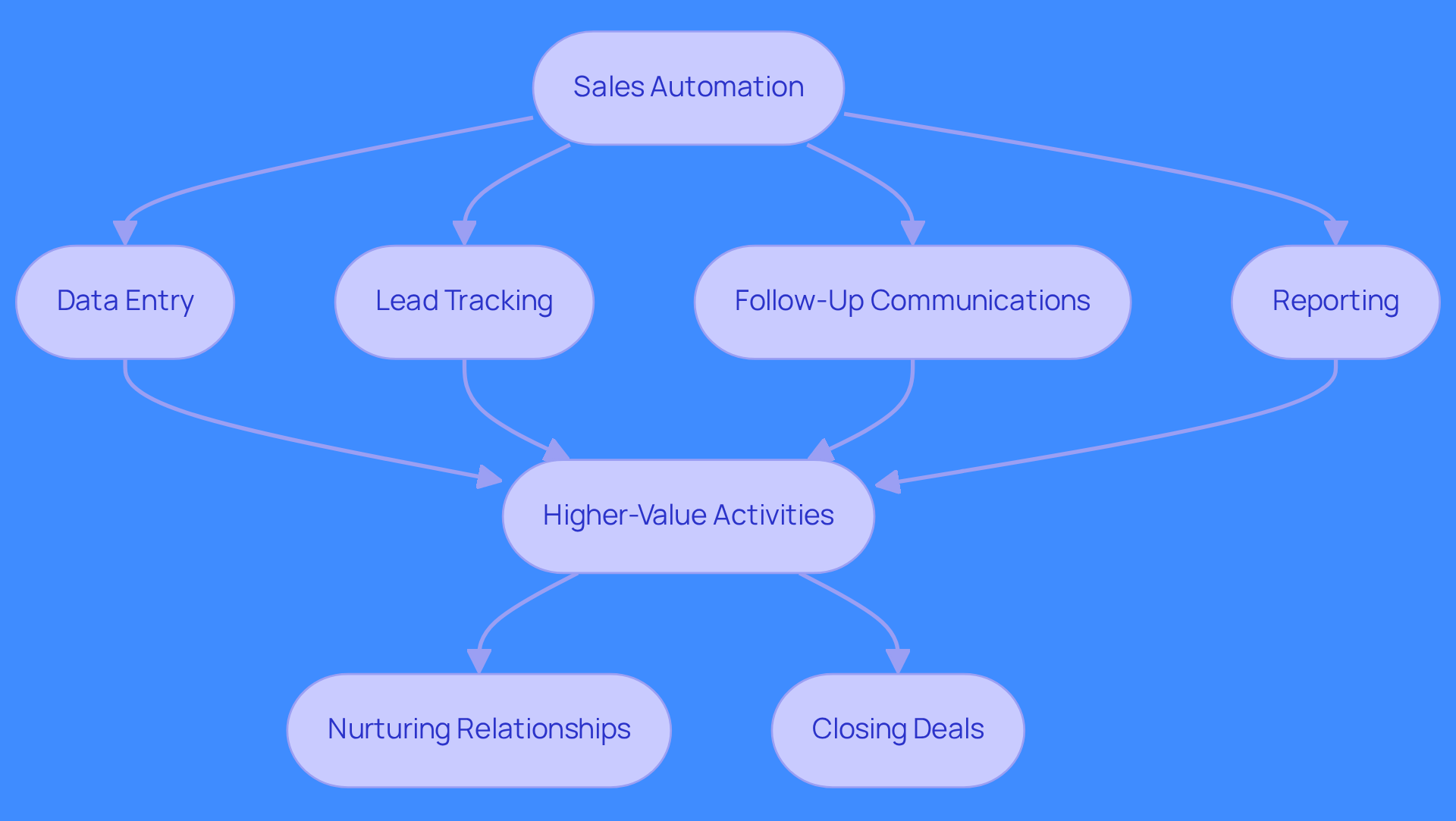
Sales teams are bogged down by repetitive tasks that drain their productivity. Sales technology, particularly enterprise sales automation, simplifies and mechanizes tasks including:
- Data entry
- Lead tracking
- Follow-up communications
- Reporting
Automating these tasks lets revenue teams focus on higher-value activities like nurturing relationships and closing deals.
Sales technology is essential for driving productivity. It reduces the time spent on routine tasks, allowing representatives to engage more effectively with prospects. Mechanization ensures consistency in messaging and follow-ups, which is crucial for maintaining a professional image and enhancing customer experience. Organizations that implement enterprise sales automation experience significant boosts in efficiency and income, highlighting its critical role in modern sales strategies. Sales streamlining can free up hours each week for representatives, significantly boosting efficiency and revenue growth.
Implement Effective Sales Automation Practices
To implement effective sales automation practices, consider the following strategies:
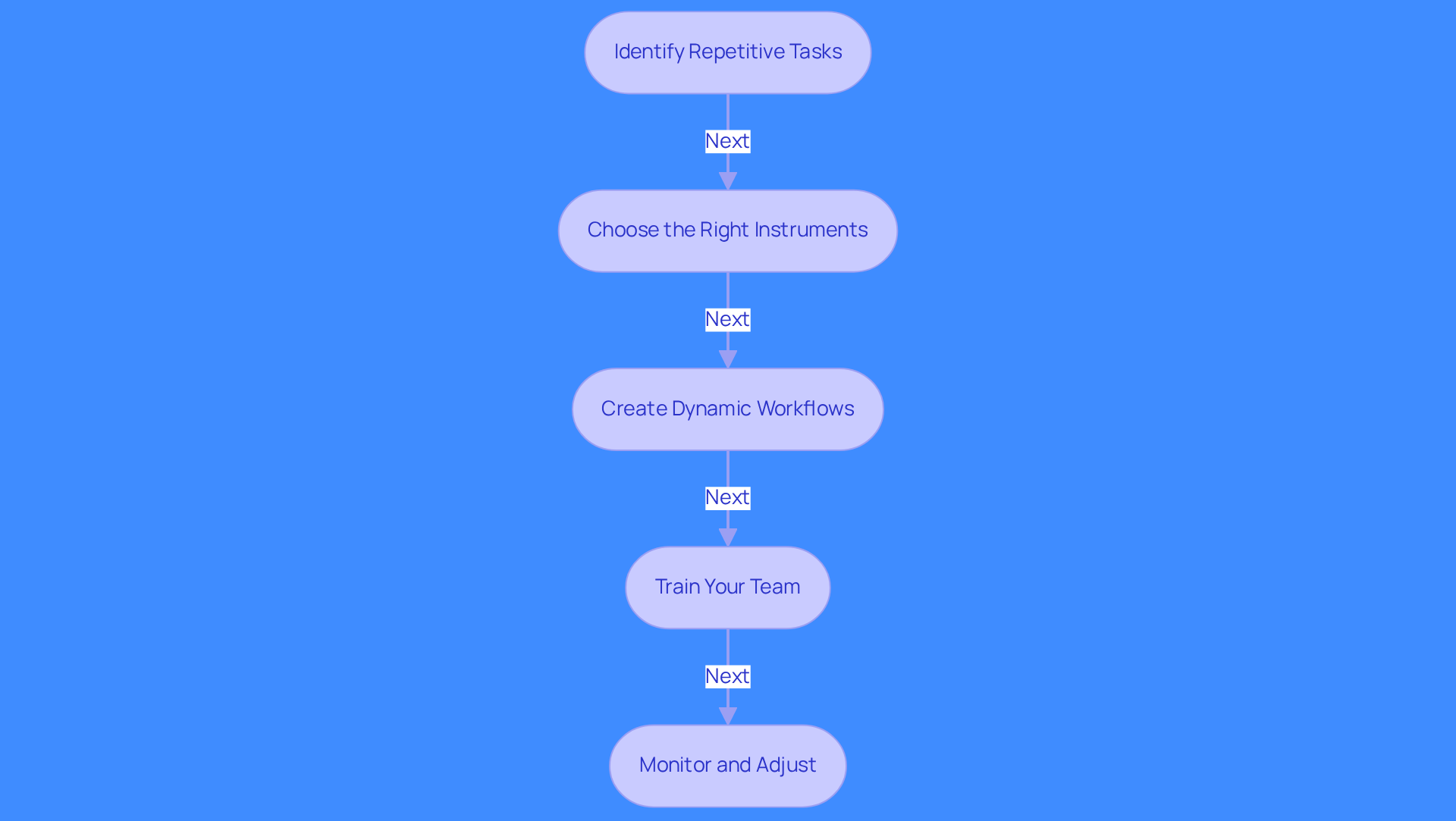
- Identify Repetitive Tasks: Sales agents are wasting valuable time on administrative tasks instead of selling. Outline your selling procedure to pinpoint tasks that are repetitive and time-consuming, like data entry, lead qualification, and follow-up emails. Research shows that sales agents dedicate only 28-34% of their time to actively promoting. Pinpoint these tasks to boost efficiency immediately.
- Choose the Right Instruments: Choose automated tools that drive your revenue goals. Platforms like Regie.ai automate outreach, manage prospects, and unify various business functions into a streamlined workflow. The market for enterprise sales automation tools is evolving rapidly, making it essential to select solutions that enhance productivity and simplify processes.
- Create Dynamic Workflows: Create workflows that respond to prospect engagement and behavior. For example, if a lead opens an email but doesn’t respond, trigger a follow-up message tailored to their interaction. This approach personalizes outreach and increases engagement likelihood, as timely follow-ups can improve qualification chances by up to 21 times if responded to within five minutes.
- Train Your Team: Train your sales team thoroughly on the technology and processes. Regular training sessions enable them to utilize automated processes effectively, maximizing benefits. Sales technology can save reps hours each week, allowing them to focus on engaging qualified leads instead of administrative tasks.
- Monitor and Adjust: Regularly assess the performance of your automated processes. Use analytics to determine what’s working and what isn’t, and be ready to make adjustments as needed. Efficient sales streamlining requires continuous assessment to ensure it meets the evolving needs of your sales team and aligns with broader business objectives.
Leverage AI and Technology for Enhanced Automation
Outbound sales teams struggle with fragmented tech stacks and outdated workflows that hinder efficiency and revenue growth.
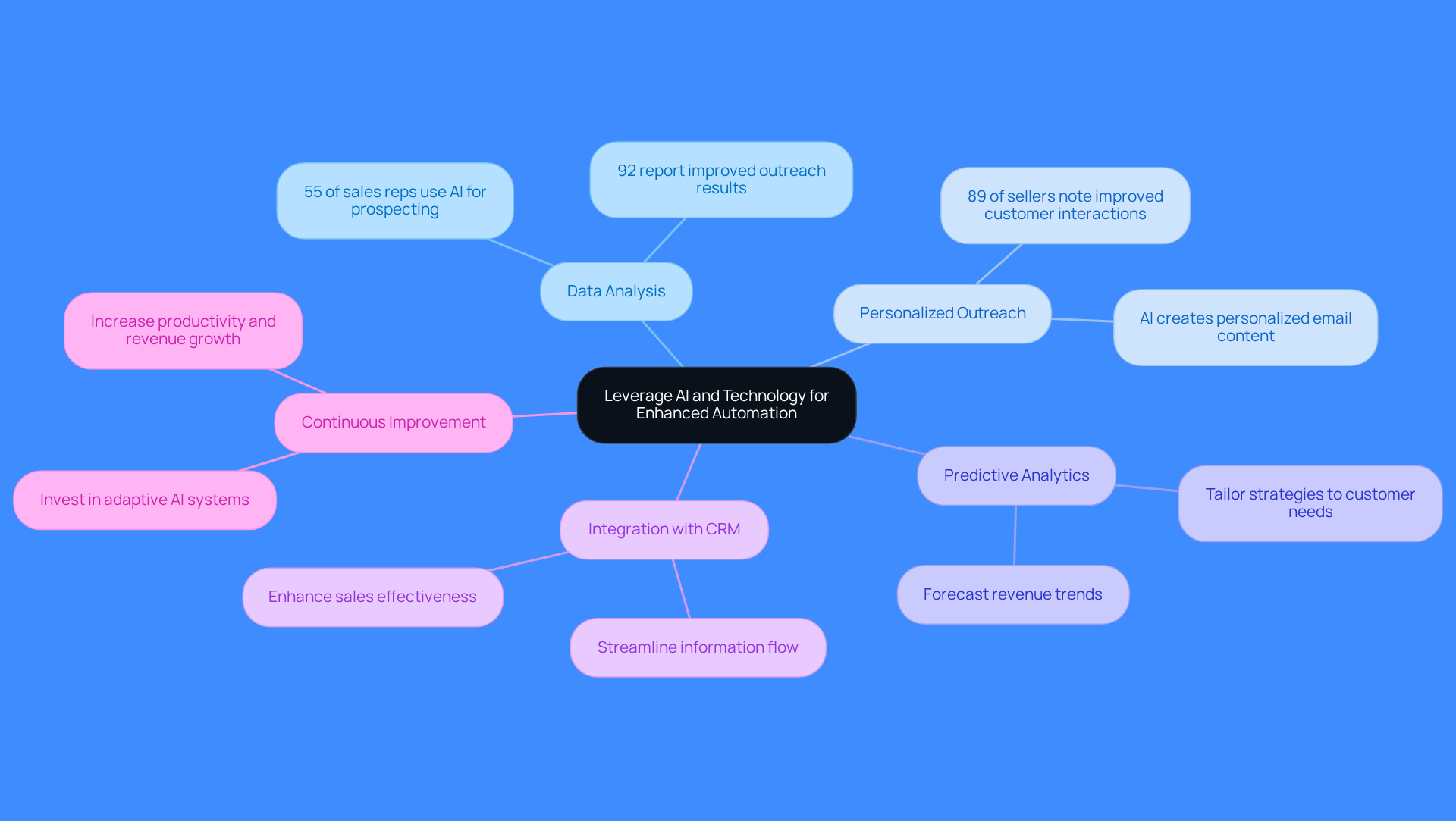
Use AI tools to analyze data and pinpoint valuable leads. Segment leads by behavior and engagement. This targeted approach boosts prospecting efficiency. Currently, 55% of sales reps use AI for prospecting, and 92% report improved outreach results.
Adopt AI messaging solutions to personalize outreach efficiently. AI can create personalized email content based on past interactions, ensuring relevance to potential customers. This method saves time and boosts engagement, with 89% of sellers noting improved customer interactions.
Leverage predictive analytics to forecast revenue trends and customer actions. This capability helps marketing teams prioritize leads and tailor their strategies to meet diverse customer needs, increasing conversion rates.
Integrate automation tools with your CRM and other platforms for better enterprise sales automation efficiency. This integration streamlines information flow, enhancing sales effectiveness through enterprise sales automation and reducing administrative friction that hinders productivity.
Invest in AI systems that adapt based on previous interactions and results. These systems improve over time, providing more accurate insights and recommendations for your sales team. Implementing AI agents leads to increased productivity and revenue growth, highlighting the need for continuous improvement in sales strategies.
Measure and Optimize Your Sales Automation Strategy
Sales automation strategies often falter due to unclear performance metrics and outdated processes.
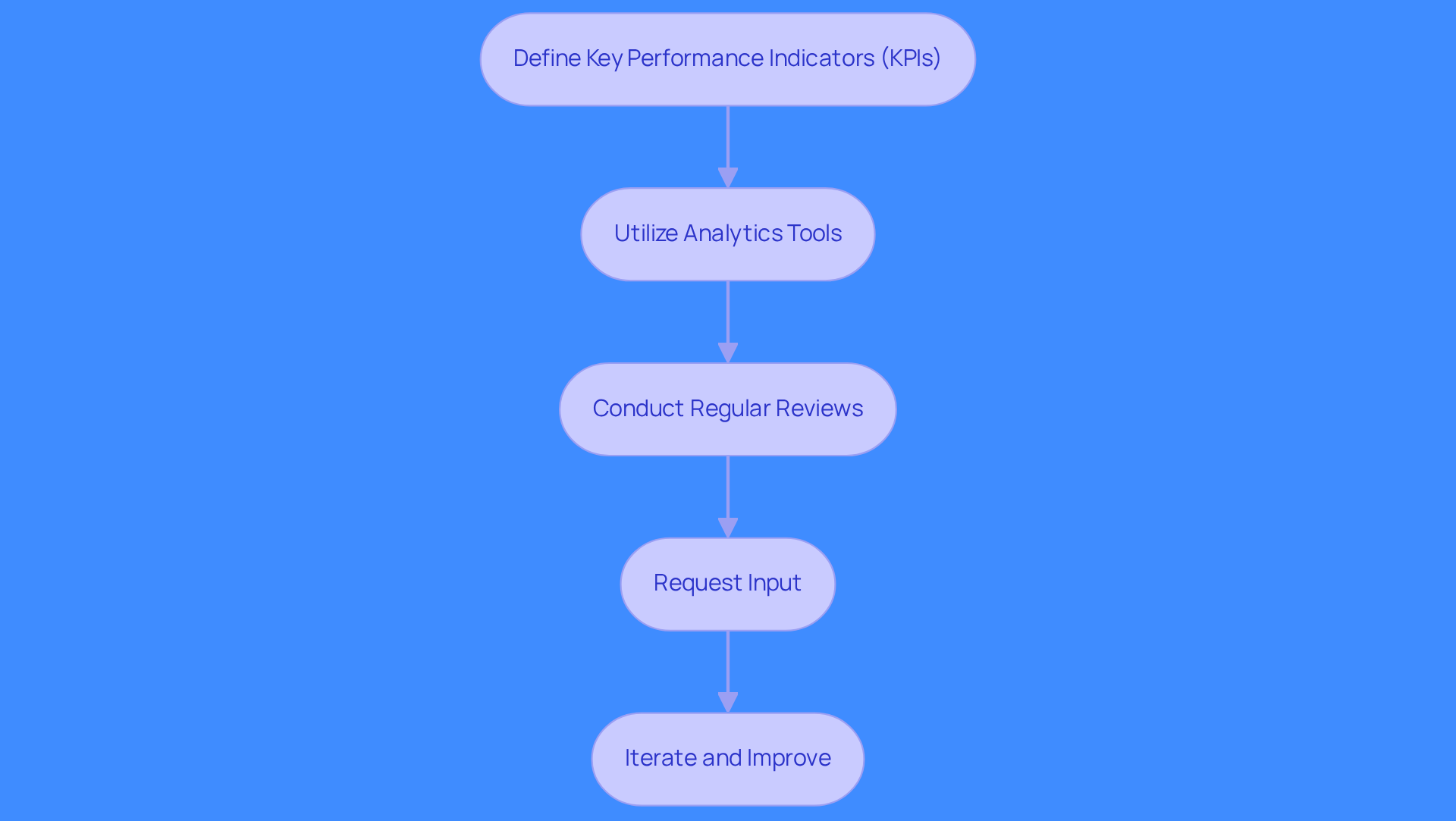
- Define Key Performance Indicators (KPIs): Establish clear KPIs that align with your revenue objectives. Critical KPIs include conversion rates, response times for prospects, and overall sales growth. For instance, responding to a lead within one minute can increase conversion rates by 391%, underscoring the need for timely engagement.
- Utilize Analytics Tools: Leverage advanced analytics tools to monitor the performance of your automated processes. Platforms like Regie.ai provide valuable insights into engagement rates and the effectiveness of various outreach approaches, enabling data-driven decision-making.
- Conduct Regular Reviews: Arrange consistent evaluations of your sales process. Analyze the collected data to identify trends, successes, and areas needing improvement. Regular evaluations keep your approach aligned with market changes and team performance.
- Request Input: Gather feedback from your sales team on the automation tools and processes. Their insights can reveal pain points and highlight opportunities for enhancement, ensuring that the tools effectively support their workflows.
- Iterate and Improve: Use the insights gained from your measurements and feedback to make informed modifications to your operational strategy. Continuous improvement is crucial for maximizing the effectiveness of your enterprise sales automation efforts, ultimately driving better outcomes and enhancing team productivity. Without a commitment to continuous improvement, your sales automation efforts risk stagnation and missed revenue opportunities.
Conclusion
Sales teams struggle with repetitive tasks that drain productivity and hinder revenue growth. Automation allows sales teams to eliminate these tasks, enabling them to concentrate on building customer relationships and closing deals. Effective sales automation improves efficiency and enhances brand professionalism through consistent communication and follow-ups.
Identify and eliminate repetitive tasks, choose the right tools, and create efficient workflows to enhance sales automation. Using AI can enhance automation by personalizing outreach and delivering actionable insights. Regularly measure and optimize sales automation strategies to meet market demands and boost performance.
Implementing these practices drives measurable success and positions organizations competitively. Investing in streamlined sales automation tools boosts efficiency and drives revenue growth. Enterprises that adopt these principles will lead in sales efficiency and effectiveness.
Frequently Asked Questions
What is sales automation?
Sales automation refers to the use of technology to simplify and mechanize repetitive tasks within sales teams, such as data entry, lead tracking, follow-up communications, and reporting.
Why is sales automation important?
Sales automation is important because it reduces the time sales representatives spend on routine tasks, allowing them to focus on higher-value activities like nurturing relationships and closing deals.
How does sales automation impact productivity?
By automating repetitive tasks, sales technology enhances productivity, enabling representatives to engage more effectively with prospects and freeing up hours each week for more strategic work.
What are some tasks that can be automated in sales?
Tasks that can be automated include data entry, lead tracking, follow-up communications, and reporting.
How does sales automation improve customer experience?
Sales automation ensures consistency in messaging and follow-ups, which helps maintain a professional image and enhances the overall customer experience.
What benefits do organizations experience from implementing sales automation?
Organizations that implement sales automation often see significant boosts in efficiency and income, highlighting its critical role in modern sales strategies.
List of Sources
- Understand Sales Automation and Its Importance
- Sales automation in 2026: Best tools, insights, and ideas (https://highspot.com/blog/sales-automation)
- globenewswire.com (https://globenewswire.com/news-release/2026/03/04/3249110/28124/en/sales-process-automation-software-business-report-2026-a-19-5-billion-industry-by-2030-surge-in-adoption-in-healthcare-for-consultative-and-solution-selling-expands-market-opportun.html)
- blog.hubspot.com (https://blog.hubspot.com/sales/8-sales-automation-benefits-for-sales-teams-beyond-time-savings)
- AI Agents Take Center Stage – Will Sales Teams That Automate Win in 2026? (https://futurumgroup.com/insights/ai-agents-take-center-stage-will-sales-teams-that-automate-win-in-2026)
- apollo.io (https://apollo.io/insights/why-are-companies-investing-in-sales-automation-software-now-more-than-ever)
- Implement Effective Sales Automation Practices
- Sales automation in 2026: Best tools, insights, and ideas (https://highspot.com/blog/sales-automation)
- apollo.io (https://apollo.io/insights/new-sales-simplified)
- monday.com (https://monday.com/blog/crm-and-sales/best-enterprise-sales-automation-software-ai)
- cal.com (https://cal.com/blog/best-sales-automation-tools)
- pandadoc.com (https://pandadoc.com/blog/automating-sales-processes)
- Leverage AI and Technology for Enhanced Automation
- AI Agents Take Center Stage – Will Sales Teams That Automate Win in 2026? (https://futurumgroup.com/insights/ai-agents-take-center-stage-will-sales-teams-that-automate-win-in-2026)
- AI Update, March 13, 2026: AI News and Views From the Past Week (https://marketingprofs.com/opinions/2026/54427/ai-update-march-13-2026-ai-news-and-views-from-the-past-week)
- The Productivity Gap: New Survey Shows 9 in 10 Sellers Are Betting on AI and Agents To Help (https://salesforce.com/news/stories/state-of-sales-report-announcement-2026)
- emarketer.com (https://emarketer.com/content/aws-develops-ai-agents-automate-sales-workflows-after-mass-layoffs)
- forbes.com (https://forbes.com/sites/charlestowersclark/2025/12/10/ai-in-2026-10-predictions-on-automation-and-the-future-of-work)
- Measure and Optimize Your Sales Automation Strategy
- Sales automation in 2026: Best tools, insights, and ideas (https://highspot.com/blog/sales-automation)
- pipedrive.com (https://pipedrive.com/en/blog/sales-and-marketing-automation)
- What Sales KPIs Should You Track in 2026? | Apollo (https://apollo.io/insights/sales-kpis)
- The 2026 Guide to Sales and Marketing Performance Metrics: KPIs, Dashboards, and AI Insights - Querio (https://querio.ai/articles/2026-guide-sales-marketing-performance-metrics-kpis-dashboards-ai-insights)
FAQs
Read more posts
View all Blogs

Need more help?
If you still have questions, make sure to check out our Help Center: there, you'll find all the tips & advice you'll need to get your team up & running with Regie.ai.