General
What Are Lead Statuses in Salesforce and Why They Matter
The Regie Team
|
Jul 10, 2026

Introduction
Disorganization in lead management results in lost deals and wasted resources. Clear lead statuses in Salesforce are essential for tracking prospects effectively through the sales process. Utilizing these statuses allows organizations to refine outreach strategies and boost conversion rates. Sales teams must implement and manage these statuses strategically to maximize revenue impact.
Define Lead Statuses in Salesforce
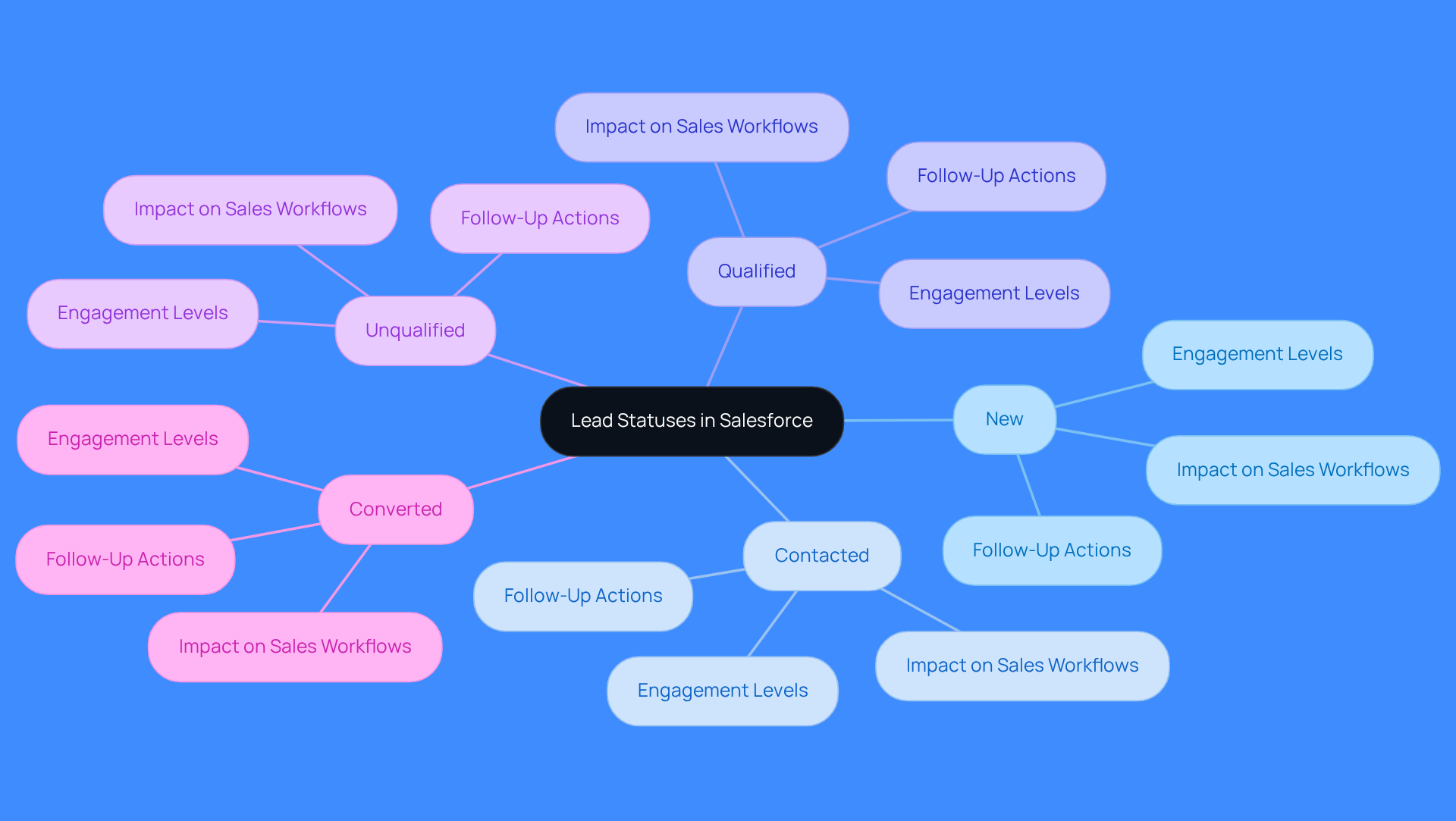
Sales teams often grapple with fragmented lead conditions that hinder effective tracking and follow-up. The lead statuses in Salesforce serve as critical indicators of a prospect's status in the sales process, allowing teams to monitor engagement levels and determine necessary follow-up actions. Common classifications include 'New', 'Contacted', 'Qualified', 'Unqualified', and 'Converted'. Each condition offers insights into the prospect's journey, enabling representatives to prioritize outreach and tailor communication strategies effectively.
Defining opportunity stages clearly helps streamline sales workflows and boosts effectiveness. Organizations must regularly update prospect conditions to reflect the latest actions, ensuring accurate tracking and reporting. For instance, personalizing opportunity condition values can align them with revenue cycles, enhancing management and reporting.
Clear definitions for progress categories are vital to avoid confusion and enhance decision-making. Many organizations use a single field for multiple ideas, leading to ambiguity that can negatively impact revenue performance. Specific classifications, like 'Attempting to Contact' or 'Qualified', can improve clarity and increase follow-up efficiency.
Regie.ai automates outreach based on engagement signals, ensuring the right message reaches the right prospect at the right time. By leveraging over 100 signals from platforms like Google, LinkedIn, G2, and Crunchbase, Regie.ai helps prioritize prospects based on genuine buying intent, improving opportunity management efficiency. A recent deployment of Regie.ai's Auto-Pilot for cold outbound prospecting demonstrated how a dedicated Agent could independently identify and engage new accounts, significantly boosting conversion rates.
Statistics show that 78% of managers feel personally accountable for ensuring their teams successfully embrace new technologies, underscoring the need for effective lead statuses in Salesforce. By utilizing Regie.ai's AI prospecting agents, organizations can assess marketing strategies, monitor conversion rates, and identify areas for enhancement, ultimately driving improved outcomes and achieving significant ROI.
Explain the Importance of Lead Statuses in Sales
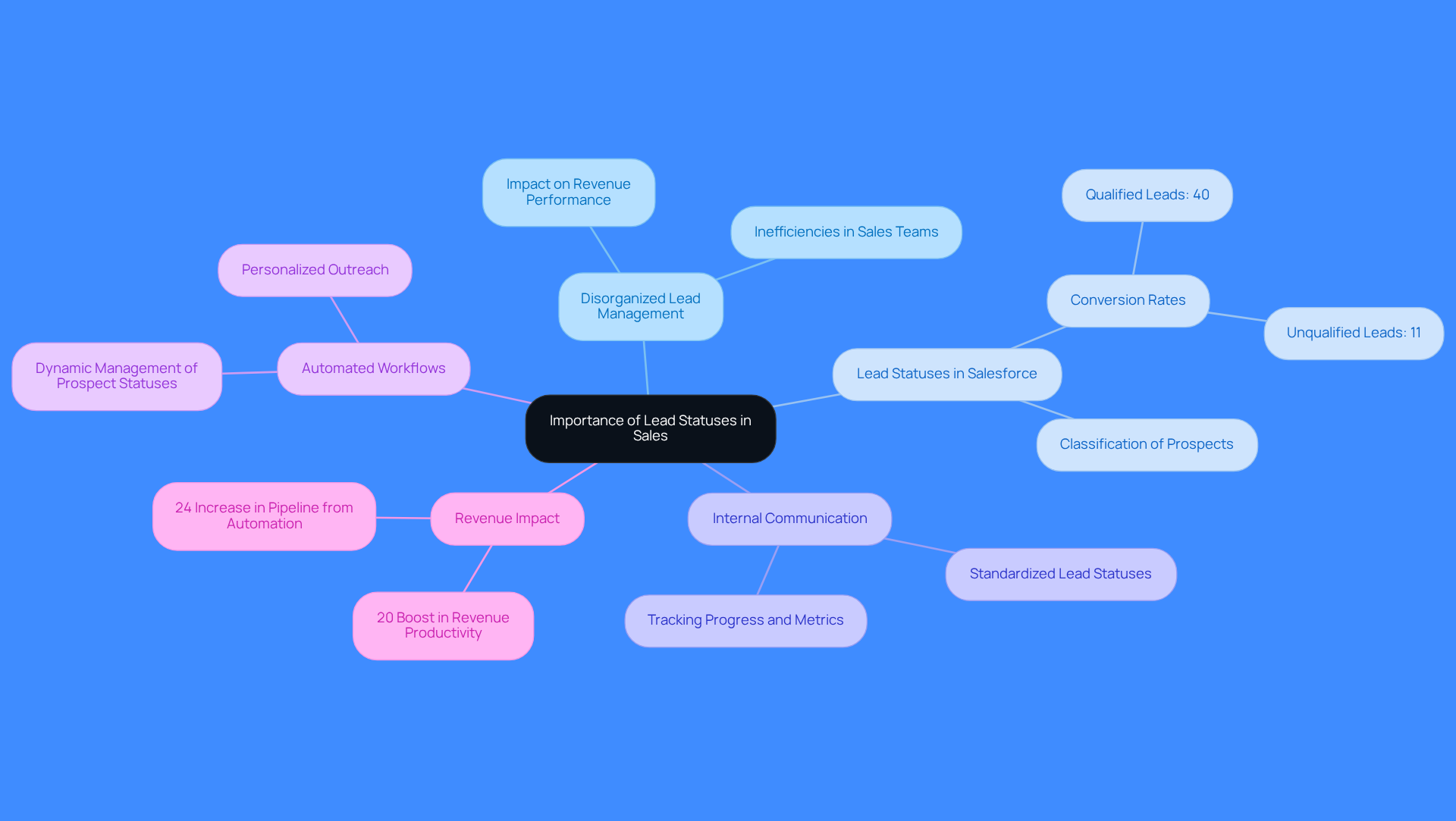
Disorganized lead management hinders revenue performance, creating inefficiencies that sales teams can't afford. Lead statuses in Salesforce create an organized system that enables marketing teams to classify prospects based on engagement levels, ensuring that sales representatives prioritize follow-ups effectively. Qualified leads convert at 40%, while unqualified ones lag at just 11%.
Enhancing internal communication through standardized lead statuses in Salesforce makes it easier to track progress and performance metrics. This clarity improves forecasting precision, leading to better conversion rates and more effective selling processes. Organizations that adopt structured scoring and prioritization see a 20% boost in revenue productivity, demonstrating the efficiency of opportunity classifications.
With Regie.ai's AI-driven engagement platform, prospect statuses can be dynamically managed through automation that targets large markets with personalized workflows. Regie.ai adjusts outreach based on engagement, persona, and intent signals, enabling sales teams to prioritize efforts and maximize outreach efficiency. Automated workflows streamline sales processes, allowing teams to focus on high-value interactions that drive results. One Regie.ai client achieved a 24% increase in their pipeline by utilizing these automated workflows, showcasing the concrete advantages of efficient prospect management. Streamlined lead management directly correlates with increased revenue and improved sales outcomes.
Detail the Functionality and Types of Lead Statuses
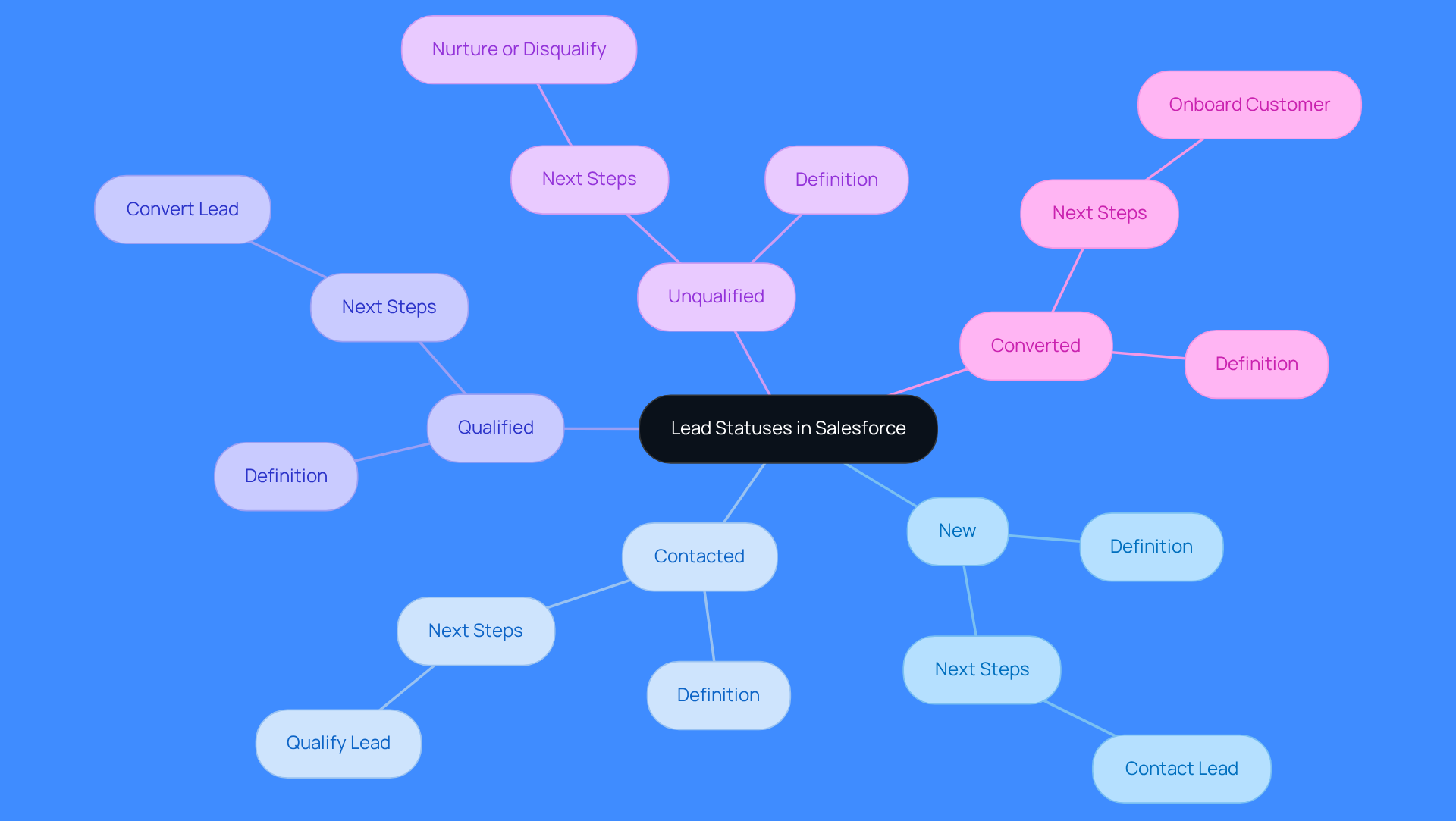
In Salesforce, managing opportunity conditions is critical for optimizing sales pipeline performance. The common types of lead statuses include:
- New: A lead that has just been created and has not yet been contacted.
- Contacted: Indicates that the sales representative has reached out to the potential client.
- Qualified: Prospects that have shown interest and meet the criteria for potential customers.
- Unqualified: Prospects that do not meet the necessary criteria for further engagement.
- Converted: Indicates prospects have successfully transitioned into customers.
Each condition directs sales agents on their next steps, ensuring that prospects are cultivated according to their current engagement level. For instance, establishing an organized prospect classification system significantly boosts sales productivity. A case study revealed that organizations with clear definitions for opportunity classifications enhanced their conversion rates by 28% through improved alignment of sales efforts with business objectives.
Qualified prospects convert at higher rates, underscoring the importance of precise management of their categorization. Furthermore, structured procedures eliminate confusion and ensure timely follow-ups, ultimately leading to enhanced revenue performance. By leveraging these functionalities, marketing teams can refine their outreach initiatives and drive overall revenue operations.
Discuss Best Practices for Managing Lead Statuses
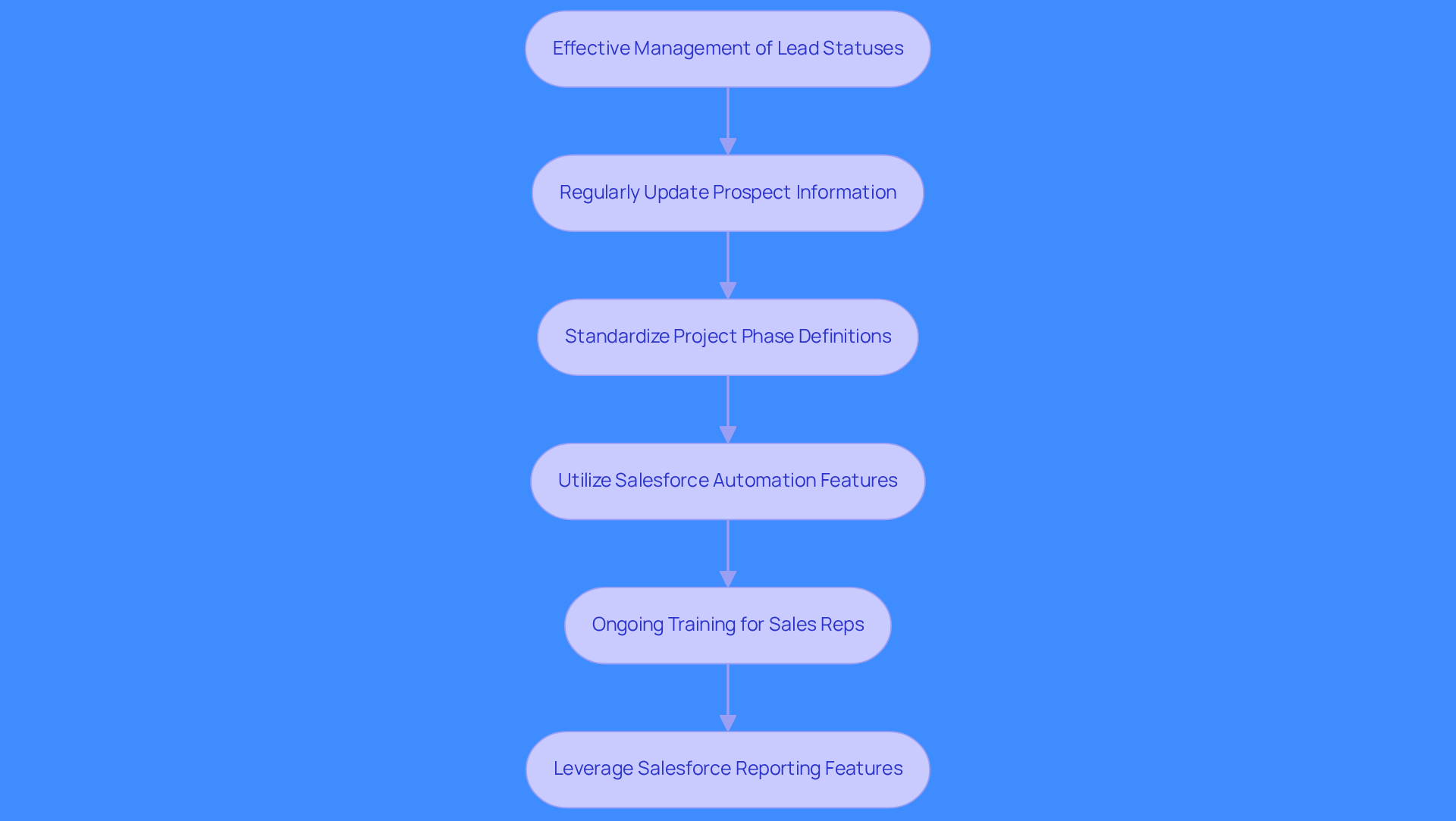
Sales teams often struggle with managing lead statuses in Salesforce effectively, which leads to missed opportunities and inefficient workflows. Regularly updating prospect information keeps records accurate and ensures timely follow-ups. Standardizing project phase definitions across the organization ensures clarity and consistency. Salesforce's automation features simplify updating lead statuses in Salesforce, thereby reducing manual errors. Ongoing training for sales reps is vital for understanding lead statuses in Salesforce and using the platform effectively. Salesforce's reporting features help teams efficiently analyze lead statuses in Salesforce. Effective management of lead statuses in Salesforce not only boosts engagement but also drives down costs, making it a critical focus for sales leaders.
Conclusion
Without clear lead statuses, sales teams struggle to prioritize their efforts, leading to missed opportunities and wasted resources. By clearly defining and managing these statuses, sales teams can effectively track prospects, prioritize follow-ups, and tailor their outreach strategies. A structured approach to lead management streamlines workflows and directly impacts conversion rates, driving revenue growth.
The article highlights the importance of lead statuses, detailing their functionality and the various types, such as:
- New
- Contacted
- Qualified
- Unqualified
- Converted
Each status serves as a critical indicator of a prospect's journey, guiding sales representatives in their engagement efforts. Furthermore, integrating tools like Regie.ai can automate and enhance this process, utilizing over 100 signals to prioritize leads based on genuine buying intent, thereby improving efficiency and effectiveness in outreach.
In conclusion, adopting structured lead management practices with tools like Regie.ai can transform sales efficiency and drive measurable revenue growth. By leveraging these strategies, organizations can enhance their sales performance, reduce inefficiencies, and ultimately achieve greater success in their revenue goals.
Frequently Asked Questions
What are lead statuses in Salesforce?
Lead statuses in Salesforce are critical indicators of a prospect's status in the sales process, allowing sales teams to monitor engagement levels and determine necessary follow-up actions. Common classifications include 'New', 'Contacted', 'Qualified', 'Unqualified', and 'Converted'.
Why is it important to define opportunity stages clearly?
Clearly defining opportunity stages helps streamline sales workflows and boosts effectiveness. It ensures accurate tracking and reporting by reflecting the latest actions taken on prospects, which enhances decision-making and avoids confusion.
How can organizations improve clarity in lead statuses?
Organizations can improve clarity by using specific classifications for lead statuses, such as 'Attempting to Contact' or 'Qualified', rather than using a single field for multiple ideas. This specificity can enhance follow-up efficiency and reduce ambiguity.
How does Regie.ai assist with lead management?
Regie.ai automates outreach based on engagement signals, ensuring the right message reaches the right prospect at the right time. It leverages over 100 signals from platforms like Google, LinkedIn, G2, and Crunchbase to prioritize prospects based on genuine buying intent.
What impact did Regie.ai's Auto-Pilot have on cold outbound prospecting?
A recent deployment of Regie.ai's Auto-Pilot for cold outbound prospecting demonstrated that a dedicated Agent could independently identify and engage new accounts, significantly boosting conversion rates.
What percentage of managers feel accountable for their teams' adoption of new technologies?
Statistics show that 78% of managers feel personally accountable for ensuring their teams successfully embrace new technologies, highlighting the importance of effective lead statuses in Salesforce.
How can Regie.ai help organizations assess their marketing strategies?
By utilizing Regie.ai's AI prospecting agents, organizations can assess marketing strategies, monitor conversion rates, and identify areas for enhancement, ultimately driving improved outcomes and achieving significant ROI.
List of Sources
- Define Lead Statuses in Salesforce
- Salesforce Newsroom (https://salesforce.com/news)
- Understanding Lead Statuses in Salesforce (https://brightcall.ai/blog/understanding-lead-statuses-in-salesforce)
- Salesforce Lead Status Best Practices - Iceberg RevOps (https://icebergops.com/how-to-manage-lead-status-in-salesforce)
- Moving Through the Sales Cycle using Salesforce Lead Status (https://marcloudconsulting.com/sf-basics/salesforce-lead-status)
- Explain the Importance of Lead Statuses in Sales
- 30 Lead Scoring Statistics: Data-Driven Insights for B2B Sales Success in 2026 | Landbase (https://landbase.com/blog/lead-scoring-statistics)
- Lifecycle Stages vs Lead Statuses: Navigating the Customer Journey (https://newbreedrevenue.com/blog/lifecycle-stages-vs-lead-statuses-customer-journey)
- Lead-to-MQL Conversion Rate Benchmarks by Industry & Channel – First Page Sage (https://firstpagesage.com/reports/lead-to-mql-conversion-rate-benchmarks-by-industry-channel-fc)
- 35 Lead Qualification Statistics: Essential Data for B2B Sales Success in 2026 | Landbase (https://landbase.com/blog/lead-qualification-statistics)
- B2B Lead Conversion Metrics to Track - DemandScience (https://demandscience.com/resources/blog/7-lead-conversion-metrics-you-should-be-tracking)
- Detail the Functionality and Types of Lead Statuses
- How to Track Your Salesforce Lead History and Conversion Rates (https://soliantconsulting.com/blog/how-track-lead-status-history-conversion-rates-salesforce)
- Moving Through the Sales Cycle using Salesforce Lead Status (https://marcloudconsulting.com/sf-basics/salesforce-lead-status)
- Tracking Lead Status with RevOps as a Service (https://blog.revpartners.io/en/revops-articles/revops-as-a-service-lead-status)
- RevOps Co-op Blog: Lead Stage vs. Lead Status (https://revopscoop.com/post/lead-stage-vs-lead-status)
- Lead Status: Definition, Examples & Use Cases (https://saber.app/glossary/lead-status)
- Discuss Best Practices for Managing Lead Statuses
- Salesforce Lead Status Best Practices - Iceberg RevOps (https://icebergops.com/how-to-manage-lead-status-in-salesforce)
- Lead Management in Salesforce: 6 Best Practices (https://coherentsolutions.com/insights/effective-salesforce-lead-management-process-6-best-practices)
- 31 Lead Management Statistics in 2023 (https://salesgenie.com/blog/lead-management-statistics)
- Salesforce lead management: Best practices - Routine Automation (https://routine-automation.com/blog/salesforce-lead-management-best-practices)